What are the 3 best things to do in Cremona Italy?
Nestled in the heart of Northern Italy, Cremona is a treasure trove of history, culture, and culinary delights waiting to be discovered. This charming city, renowned for its rich musical heritage and stunning architecture, offers travelers a unique glimpse into Italy’s artistic soul.
While the classic landmarks like the Torrazzo and the Violin Museum are essential, this article goes beyond the usual checklist to explore the city’s vibrant cultural heartbeat and its deeply-felt traditions, such as the annual Torrone Festival.
Join us as we explore the best of this enchanting destination, ensuring your visit is filled with wonder, inspiration, and authenticity.
Table of Contents for best things to do in Cremona Italy
What are the best things to do in Cremona Italy?
Cremona is a treasure trove of history, culture, and culinary delights. While essential visits include the iconic Piazza Duomo, climbing the Torrazzo bell tower for panoramic views, and exploring the legendary Violin Museum, the true essence of Cremona is found in its deeply-felt traditions.
This article invites you to go beyond the landmarks and explore the vibrant cultural heartbeat of the city, exemplified by events like the beloved annual Torrone Festival.
🏛️ Piazza Duomo
Piazza Duomo is not just a square; it represents the true beating, iconic heart of Cremona. Enclosed by magnificent historic buildings, the square proudly serves as the stage for the city’s most recognizable symbols: the Cathedral, the Palazzo Comunale (Town Hall), and the imposing Torrazzo.
The Piazza is characterized by its historic porticoes, architectural elements that frame the space and are typical of the area, offering essential shelter (as witnessed during the Torrone Festival, where visitors took cover from the rain). Furthermore, the scenery is enriched by a small yet significant historic metal newsstand (edicola), a rare piece of urban furniture in Italy that perfectly integrates into the historic setting.
As the area is entirely pedestrian-only, access is exclusively on foot, ensuring a quiet and immersive visitor experience.
Here is the location of the splendid main square of Cremona, Piazza Duomo: https://maps.app.goo.gl/Z19xfjfebHN151eG9.
🔔 The Bell Tower: Il Torrazzo
The Torrazzo is the indisputable symbol of Cremona, standing majestically beside the Cathedral in the heart of Piazza Duomo. At 112.54 meters high, this magnificent structure is considered one of Europe’s tallest medieval brick bell towers. Visitors can climb its impressive 502 steps , transforming the tower into a “vertical museum” offering panoramic views of the city.
A Note for Visitors: For the most current information regarding opening hours, ticket prices, and booking your climb, please check the official website of the vertical museum: Museo Verticale.
Note that, like the rest of Piazza Duomo, it is located in a pedestrian-only area, accessible exclusively on foot.
🎻 Violin Museum
Cremona is renowned worldwide as the birthplace of the violin and the home of legendary masters like Antonio Stradivari. The Violin Museum (Museo del Violino) serves as the heart of this heritage, showcasing an extraordinary collection of historic instruments, including unique pieces crafted by the great Cremonese luthiers.
Here is the location of Violin Museum: https://maps.app.goo.gl/UgkjjMfLUBXMNoLe8.
You can arrive at the museum also by car and you can find parking nearby.
🧭 What to do in Cremona Italy in one day: Finding the Right Balance
Cremona’s historic center is elegant, compact, and perfectly structured for a single-day visit entirely on foot. Given the proximity of the main attractions, you can easily cover the essentials, but the key is to prioritize based on the time of year and your personal interests.
Your Day Trip: Core Choices and Flexibility
In one day, you can comfortably visit the three classic attractions. However, we recommend focusing on quality over quantity and considering your options:
| Must-Do | Priority | Option to Choose |
| Piazza Duomo & Cathedral | Essential | Start and end your day here, soaking up the atmosphere. |
| The Stradivari Legacy | High Priority | Visit the Violin Museum to understand Cremona’s deep musical heritage. |
| The Iconic View | Highly Recommended | The Climb up the Torrazzo (Vertical Museum): This is more than just a climb; it’s a unique opportunity to ascend one of Europe’s tallest brick bell towers, turning the 502 steps into a vertical museum experience, offering unparalleled views you can’t get elsewhere. Alternative: If the Palazzo Comunale is open (during special events), the rare internal view is an excellent substitute. |
🚶 The Quintessential Italian Experience: The Passeggiata
Beyond the checklist of museums and monuments, the most authentic activity you can embrace in Cremona is the Passeggiata—the slow, unhurried, and ritualistic Italian stroll.
This is a deep-rooted cultural custom, and Cremona’s historic center is designed for it. The fact that key areas, especially Piazza Duomo and the surrounding streets, are pedestrian-only (or feature wide, safe sidewalks) encourages locals to slow down and socialize.
The Passeggiata is more than just walking; it’s a moment to relax, observe the beautiful architecture, browse local shops, and punctuate your day with a stop:
- Morning/Afternoon: Pause for a classic Italian caffè or a rich cappuccino at a bar under the historic porticoes.
- Late Afternoon/Evening: Indulge in an Aperitivo as the sun sets.
This ritual is essential to soaking up the local rhythm and atmosphere. Make sure to schedule time into your day not just for sightseeing, but simply for the joy of the Passeggiata.
Note: You can find paid car parking nearby, such as near the Violin Museum.
🌟 The True Heart of Cremona: Traditions that Beat Strong
When you arrive in Cremona, the first things you notice are its elegance, the imposing shadow of the Torrazzo, and, of course, the echo of the city’s celebrated violin-making tradition. But to truly understand the soul of this city, you have to immerse yourself in its most cherished traditions—the ones the locals hold dearest.
Cremona is famous worldwide for Stradivari’s violins, but it is equally iconic for its Torrone (nougat). It’s not just a dessert; it’s a deep-rooted tradition upheld by local artisans and major companies like Sperlari. While nougat is often eaten across Italy around Christmas, Cremona celebrates it with a massive annual event: the Torrone Festival.
Is the Torrone Festival connected to Cremona’s violin-making heritage?
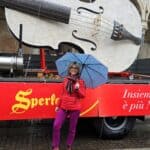
Yes, the city often uses the festival’s platform to celebrate both its most famous traditions. This is often seen through floats, art installations, or events that visually link the iconic Torrone with the famed Stradivari violin legacy.
The Annual Festival: A Commitment to Tradition
This festival takes place every single year and is a tradition so deeply felt that it never misses its date, usually held around the month of November. For example, in 2025, it ran from November 8th to 16th. What struck me, experiencing it firsthand, is that the festival never stops—even in heavy rain. On Sunday, November 16th, 2025, for instance, despite the downpour, people simply took shelter under the porticoes or in cafes, continuing to visit the stalls with their umbrellas. The event felt so vital to the community that, seeing the spectacular things they organized, it personally brought to mind the importance of the Venice Carnival for its city.
A Note for Travelers: While Cremona is often overshadowed by world-renowned Italian cities like Venice—a place almost everyone knows—it holds its own unique beauty and a vibrant, deeply felt local culture. Venice is, of course, iconic, but Cremona’s historic Piazza Duomo is equally stunning, a powerful testament to history. It’s here that the city organizes spectacular events on special occasions, which are profoundly important not only to the locals but to the entire region. This regional importance is clear when you travel to nearby towns. For example, in Crema, which is only about a half-hour drive away, you see signs and directions everywhere during the festival period. It’s a call that echoes far beyond the city walls.
Does the Torrone Festival cancel events due to rain?
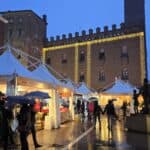
No. As personally experienced on Sunday, November 16, 2025, the festival continues even in heavy rain, with people taking shelter under porticoes or using umbrellas to continue visiting the stalls. The event’s vital importance to the community ensures it proceeds regardless of the weather.
Watch the Unique Experience of the Cremona Torrone Festival
See the vibrant atmosphere and unique traditions of the annual Torrone Festival in Cremona! From the historic artisan stalls and the iconic Torrazzo backdrop to the unexpected fun of customizing your own nougat treat and tasting the famous edible liquor cup—this video captures the authentic energy of the city’s sweetest celebration.
It’s the perfect visual summary of the deeply-felt traditions we explore in detail in this guide.
Text of the video:
You love Italian food? Then you need to experience Cremona! The city of Stradivari also hosts Italy’s sweetest festival: The Torrone Festival or Nougat. This sweet treat has centuries of history in Cremona. It was pouring rain, but the party didn’t stop!
This is the real deal: historic, artisan nougat stalls everywhere, all happening right under the iconic Torrazzo bell tower.
Walking through the historic arches is magical. And the market has a surprising variety! You have to try the Chupito Goloso: a liquor shot served in an edible chocolate cup! You eat the whole thing! The absolute best part? I got to customize my own nougat treat! Search Cremona on Tripilare.com.
The Gourmet Evolution of Torrone
The city center, especially around Piazza Duomo, comes alive with an endless array of stalls selling torrone and all kinds of local sweets. Every stand boasts dozens of flavors, because while they all carry the classic nougat, each producer wants to leave their unique mark on the tradition. You’ll find soft and hard varieties, along with daring innovations: licorice, pistachio, Sardinian chestnut, potato torrone, or even nougat with chocolate from Dubai.
A great example of this successful innovation was the Champagne Torrone. There was only one stall that had it, and it was such a hit that by the afternoon of November 16th, it was completely sold out! This shows how much visitors and Cremona natives love to experiment with their great tradition.
Beyond sales, torrone is treated as a true subject of culinary study. There was a tent set up where chefs offered samples of the more elaborate and scholarly (dotte) versions of the nougat. It wasn’t just a tasting; it was a detailed explanation, treating the dessert almost like a piece of high-end cuisine.
This focus on elevation is part of a broader trend in Italian cuisine. Across the country, the older generation (with their experience) and the new generation (with their drive for innovation) are taking tradition and evolving it to a superior level. They fiercely defend tradition but seek to respect it by pushing its boundaries. It’s a general tendency in fine Italian restaurants and even applies to iconic sweets like torrone, so it’s not surprising to find this more elaborate and studied side of the festival.
Amidst all these delights, Sperlari provided multiple ways to get a free sample in Piazza Duomo, and the queue was manageable even on a rainy day. There was a quick station for pre-packaged torroncini. But the real fun was at a second station, conveniently located under the porticoes (covered). Here, we joined a short line and were given a small cardboard base to customize our own sample! We could choose between soft or hard torrone, then select a topping cream (like rich dark chocolate or a cream-flavored option), and finally, pick sprinkles like pistachio, hazelnut, or various colored candies. Once composed, I ate my creation in just one bite, and it was absolutely delicious! It was a wonderful, interactive way to enjoy the tradition.
And for those who dare, there is the “chupito goloso” (greedy shot) for one euro: a torrone liqueur served in an edible chocolate cup, allowing you to choose the alcohol content. The festival includes also music and spectacular events on special occasions, like acrobatic shows lowered from the Palazzo Comunale and light displays.
What specific culinary activity makes the Torrone Festival interactive?

Beyond simply tasting different nougat varieties, one of the most fun and interactive activities is the free customized torroncino tasting. At a covered station, visitors can choose a base (soft or hard torrone), a cream (like dark chocolate), and various toppings (such as pistachio or hazelnut) to compose their perfect personalized bite.
Does the Torrone Festival only feature traditional nougat?
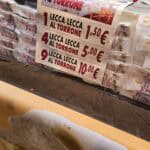
No. While tradition is central, vendors embrace both innovation and accessibility. The stalls offer high-end, elaborate products (like Champagne Torrone and special tastings), fun liqueur shots, and accessible novelty items like Torrone Lollipops, demonstrating the dessert’s versatility for all ages.
Is the nougat sold at the festival only pre-packaged or mass-produced?
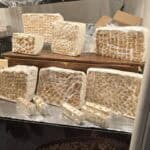
No. While tradition is upheld by major companies like Sperlari , the festival prominently features large, rustic blocks of traditional, artisanal nougat from local producers. Visitors can find everything from sophisticated high-end innovations to simple, unpackaged blocks sold by weight.
Is the Torrone Festival market confined to a single area?
No. The festival marketplace is extensive, featuring an endless array of stalls that are dislocated across various streets and smaller piazzas in Cremona’s historic center, ensuring there are treats and products to discover everywhere you walk.
A Hidden Gem Unveiled: The Town Hall
Italy is a country rich in hidden gems and treasures that are not always visible. The Palazzo Comunale (Town Hall) is a fantastic example of this. It is a beautiful, historic building that is typically closed to the public, but it opens its doors for special occasions like the Torrone Festival. The visit I made was completely free and did not require a reservation. These “hidden” places, even if not normally visitable, are fantastic jewels and truly beautiful discoveries, underlining the profound cultural depth of the country.
Inside the Palazzo, you ascend a grand staircase, finding small historical notes that help you understand the context. I was pleased to see the descriptions were clearly written in Italian, with good English translations. Some rooms are themed by color, such as a “pink room” with rosy frescoes.
The most exciting part was reaching the Sala della Consulta. From here, you get a unique and spectacular view that is normally unavailable to visitors: a breathtaking, unobstructed look out onto the Piazza Duomo and the massive Torrazzo and the Cathedral’s façade. Since people typically only see the Palazzo from the Piazza, having this free view from inside was a truly special discovery. The ceiling is beautifully decorated with eight medallions depicting the virtues of good government, painted by the Cremonese artist Antonio Rizzi (1869-1940).
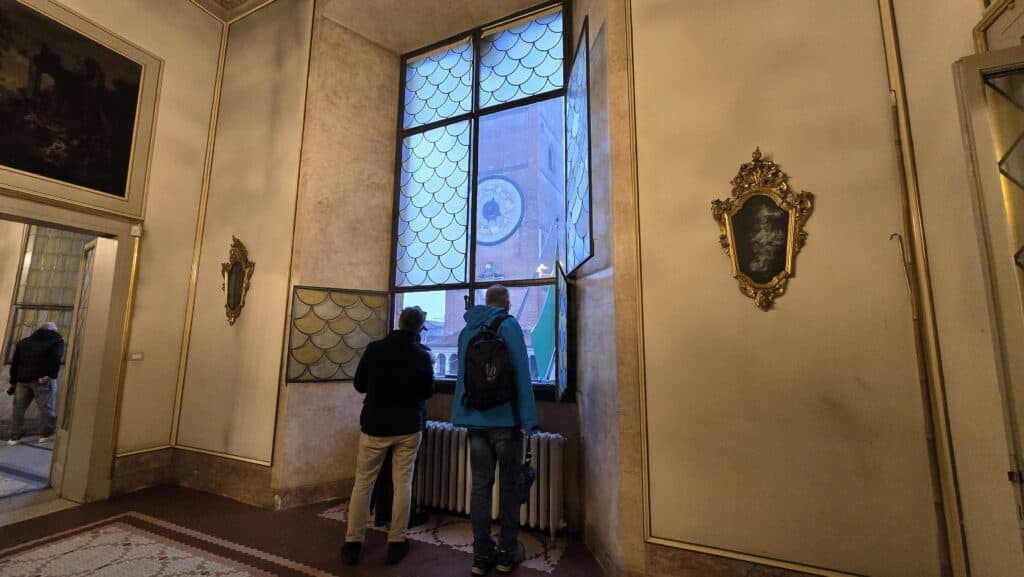
Next is the Sala della Giunta, made solemn by its red velvet, stuccoes, and mirrors. A fascinating detail here is the marble fireplace, dating back to 1502; it was relocated here and originally belonged to Palazzo Raimondi.
Another room steeped in history is the Sala dei Decurioni. I admired a precious gala carriage from the second half of the 18th century (1770–1780), intact and with all its original pieces, donated in 1890. The walls are decorated with eighteen canvases depicting the stories of Saint Homobonus, the city’s patron saint.
Finally, near the exit, there is a tribute that speaks volumes about Cremonese pride: a display case holding the city’s standard and a mannequin wearing the number 100 jersey of the local soccer team, “Cremonese.” This is an homage to Ugo Tognazzi, the iconic Cremonese actor of the film Amici Miei (My Friends), reflecting the importance of both film and local sports history here.
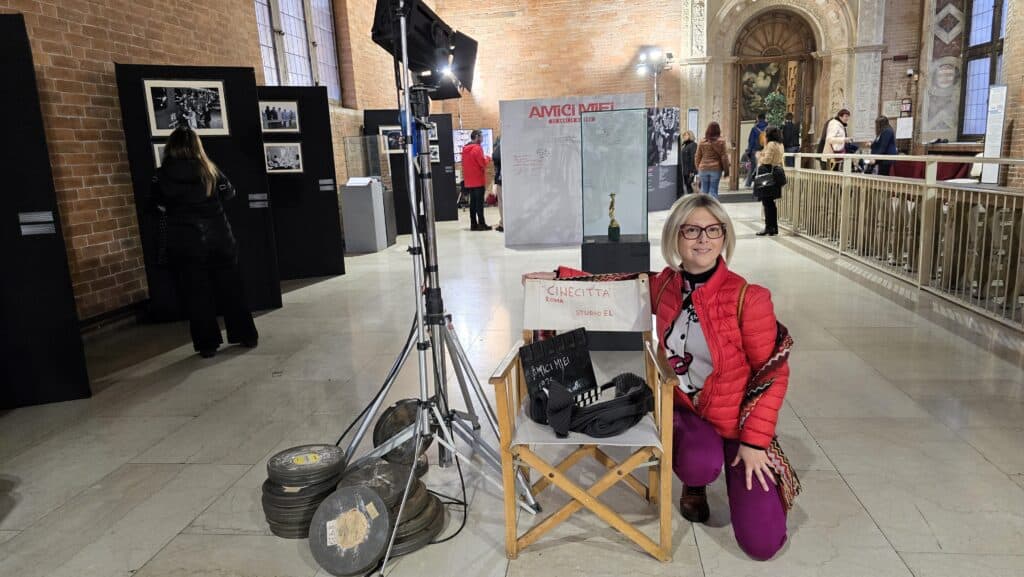
All these passions and icons are summed up in Cremona’s famous “4 Ts”: the Torrone, the Torrazzo (the bell tower), the Tette (an ironic popular addition to the city beauties), and Tognazzi. It’s a playful way to remember the authentic identity of this wonderful city.
Was the visit to Cremona’s Town Hall accessible to non-Italian speakers?
Yes. Although there was no guide, every room had clear, concise, bilingual informational panels. The descriptions were presented first in large-font Italian, followed by a complete, legible English translation, ensuring easy comprehension for international visitors.
Cremona Italy things to do nearby
Near Cremona, there are several things to see. Here are some places to see near Cremona:
- Crema is just 30 minutes by car from Cremona or easily reachable by direct train from Cremona to Crema. See the following post: Top 10 things to do in Crema Italy and nearby.
- Soncino is about 40 minutes drive from Cremona. In Soncino, there is a beautiful fortress and the Printers’ House/Museum, where the first Bible in Italy was printed. To find out more about Soncino go to the following post: Soncino Castle & Top Things to do in Soncino Italy
- Cremona is less than 1 hour’s drive from the southern area of Lake Garda. You can therefore visit beautiful locations both from a natural point of view and from a historical and archaeological point of view such as Desenzano del Garda and Sirmione.
- Desenzano del Garda. For Desenzano del Garda see the following post: Things to do in Desenzano del Garda Lake Garda Italy
- Sirmione. For Sirmione see the following post: Things to do in Sirmione Italy Lake Garda: 1 Amazing Town!
Faqs
Faqs about the best things to do in Cremona Italy
What are the must-see attractions in Cremona?
Don’t miss the stunning Cremona Cathedral, the Torrazzo (the tallest brick bell tower in Italy), and the Violin Museum showcasing the city’s rich musical heritage.
What is Cremona famous for?
Cremona is renowned for its violin-making tradition, being home to famous luthiers like Stradivari and Guarneri, as well as its beautiful historic architecture.
When is the best time to visit Cremona?
The best time to visit is during spring (April to June) and fall (September to October) when the weather is mild, and the city hosts various festivals.
How can I experience Cremona’s music culture?
Attend a concert at the Teatro Ponchielli, visit the Violin Museum, or participate in a masterclass offered by local music schools.
Are there any guided tours available in Cremona?
Yes, several companies offer guided tours that explore Cremona’s musical history, architecture, and culinary delights, often led by knowledgeable locals.
What events or festivals should I look out for in Cremona?
Check out the Stradivari Festival in September and the Cremona Music Fair, both celebrating the city’s musical legacy with concerts and exhibitions.
Can I take a day trip from Cremona?
Absolutely! Consider day trips to nearby cities like Mantua, Parma, or Brescia, all of which are rich in culture and history.
What is the best way to get around Cremona?
The city is pedestrian-friendly, so walking is ideal. Biking is also popular, and public transport links are available for further destinations.
Is Cremona suitable for families with children?
Yes, Cremona is family-friendly with parks, interactive museums, and events that engage children, making it a great destination for all ages.
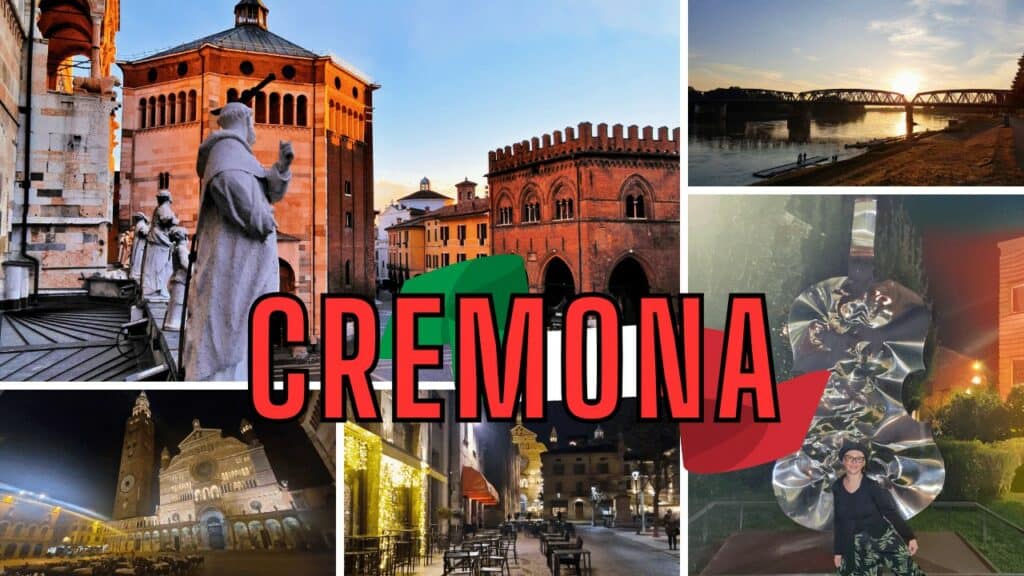
Featured image
Featured image for “What are the best things to do in Cremona Italy?”
Related post
Post related to the following subject “What are the best things to do in Cremona Italy?”