

Magic Winter Journey from Italy to Switzerland on the Green Train of the Alps: A Realistic Guide
Embark on a breathtaking winter journey through the heart of the Alps aboard the Green Train of the Alps. This unique hop-on hop-off adventure connects Italy and Switzerland, inviting you to witness the spellbinding beauty of snow-capped peaks and medieval villages.
Why read this guide? Planning a transalpine trip in December can be challenging. Many travelers face unexpected hurdles, from the biting winds on Lake Thun to the confusing online ticket activation process. Unlike standard brochures, this article is based on a real-life experience from December 27, 2025.
By reading this post, you will discover:
- Real-world logistics: How to master the 7:58 AM departure and navigate the connection between train and boat in freezing temperatures.
- Essential tips: Why the right gear is non-negotiable for the cruise and how to avoid the most common booking mistakes.
- A tested itinerary: A minute-by-minute breakdown to ensure you see the best of Thun and Bern without the stress of missing your return.
Pack your warmest gear and learn from my journey to ensure your extraordinary train ride is as seamless as it is spectacular!
Table of Contents for Green Train of the Alps Adventure
Between Alpine Dreams and Real Adventures: Why Flexibility is Key
Ideally, this journey is a masterpiece: crossing the Alps on the Green Train, discovering fairytale lakeside towns, and exploring historic castles. It’s a journey that offers an incredible variety of nature, culture, and local flavors. However, as any true traveler knows, even the most perfect plan must face the unpredictability of the real world.
In this article, you will find insights and videos from two different winter adventures where we made different choices. The first time, knowing the fog was thick, we opted for a cozy restaurant lunch and a boat trip only in the afternoon. The second time, we were even more prepared: the forecasts for Thun and the surrounding Swiss areas predicted 100% sunshine, just like the glorious sky we left behind in Italy. Yet, the Swiss mist had its own plans and welcomed us anyway. We didn’t let it discourage us: we embraced the experience, enjoyed a meal on board, and navigated the small ‘challenges’ of Swiss logistics and budget.
You might notice some shifts in tone—at times I may speak of the absolute beauty of a place, while later sharing an experience that wasn’t 100% perfect. This isn’t a contradiction, but the reality of travel. Things like weather, crowded boats, or winter hours for castles are beyond our control. We’ve kept a positive spirit because every moment was a beautiful adventure that we now carry in our hearts. Use our story to inspire your own: the destination is stunning, but the true magic lies in how you adapt and make the journey your own.
Budget & Costs: A Guide for International Travelers “For many international visitors, especially those traveling from the US, a daily pass priced between €70 and €100 might actually seem like a great value. It’s an all-in-one ticket that grants you total freedom to use trains and boats throughout the day. However, it is vital to keep your guard up regarding ‘extra’ costs. In Switzerland, the real impact on your budget often comes from the high cost of living: a simple lunch, castle entrance fees, and even a coffee can add up much faster than you’d expect. While the transport pass is a convenient and fair investment, we recommend planning ahead for your meals and activities to ensure that the Swiss prices don’t take you by surprise.”
Explore the Alps by Train: Hop-On Hop-Off Green Train
Embark on an unforgettable journey through the breathtaking Alps with this playlist dedicated to the Green Train! Explore stunning scenery, charming villages, and vibrant cities as you hop on and off the train between Italy and Switzerland.
Discover hidden gems, experience local culture, and create memories that will last a lifetime.
Watch the video directly on this page, or click here for viewing on YouTube (ideal for mobile users): https://youtu.be/gZfrTSyMIB0.


Unmissable Green Train of the Alps Adventure: Hop-On Hop-Off Between Italy & Switzerland”
Experience a breathtaking adventure through Europe’s most beautiful alpine landscapes! Watch the video to discover the magic of the Green Train of the Alps, a unique hop-on hop-off experience between Italy (Domodossola) and Switzerland (Bern).
🚂 Watch the video directly here or on YouTube (ideal for smartphones): https://youtu.be/gZfrTSyMIBO.
The Little Green Train of the Alps: A Journey Between Italy and Switzerland

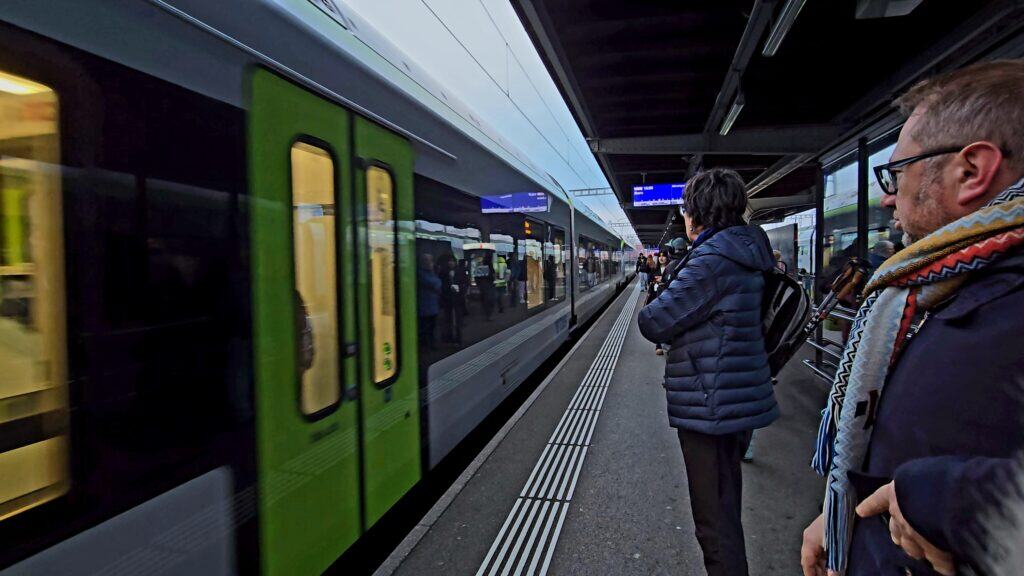
The Trenino Verde delle Alpi (Little Green Train of the Alps) is an experience from another era that invites you to discover the most authentic essence of the mountains.

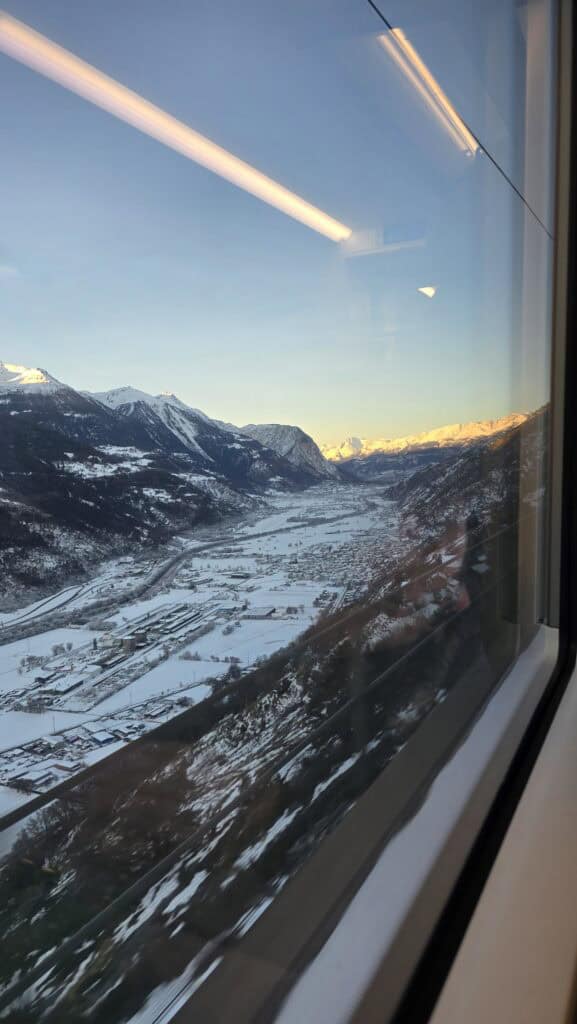
Traversing breathtaking landscapes that connect Italy and Switzerland, this itinerary takes the traveler from the charm of Domodossola to the beating heart of Bern, the evocative Swiss capital. Aboard the modern and panoramic BLS trains, you’ll be lulled by a journey that is itself the destination: a succession of snow-capped peaks, crystal-clear lakes, and enchanting villages that make every kilometer an unforgettable memory.
A magical experience, but be careful of costs and weather
A tour on the Trenino Verde delle Alpi remains one of the most spectacular experiences near the Italian border, a journey that fills the eyes with beauty. However, it’s important to know that this enchantment comes at a price and involves some unknowns. If you don’t plan carefully, between the day ticket, meals, and boat supplements, the cost can easily rise to €400 per couple for a single day.
Added to this is the uncertainty of the weather: in winter, it’s not uncommon to leave the sun in full bloom in Italy only to find yourself immersed in a thick fog once you cross the border. Given the high cost, you’d love to enjoy a clear view and a radiant sun on the mountain peaks; instead, finding yourself in gray can make you feel the burden of an investment that doesn’t deliver the desired visual “result.”
Beyond the financial aspect, you have to deal with the unpredictability of the local weather: often, even if the forecast calls for “bright sunshine” in Thun or Spiez, once you arrive you find yourself immersed in a thick fog that hides the peaks and dulls the colors of the lake. It’s a frustrating risk, especially after having made such a large expense hoping for postcard-perfect views. The comparison with Italy can be bitter: leaving the 10-11°C and clear sun of Lake Maggiore to find yourself in the cold and gray of Switzerland at double the price is a possibility to be expected. This happened to us, for example, on December 29, 2025. In December 2024, we had encountered fog but we were prepared by the weather forecast, but in 2025, we were very confident of good weather since we had checked, but instead, it wasn’t to be.
For an Italian traveler, the comparison can be stark: in just a few hours, you risk spending as much as an entire weekend in Italy or a short vacation in Spain, without the guarantee of a spectacular view. It’s a fantastic trip, but it must be approached with awareness: plan carefully, check live webcams, and, if budget is a priority, consider cheaper options for lunch. Despite the challenges, the Alps seen from that window remain a treasure worth discovering, ideally choosing the clearest day (and season).
Approximate cost schedule (per couple – 2025)
| Expenditure item | Estimated Cost (Couple) | Notes |
| BLS Day Tickets | €132 | 2nd class price (approx. €66 per person) |
| Breakfast and Snacks | €30 – €40 | Station bar / Coffee on board |
| Lunch on the boat | €100 – €120 | Single dish, drinks and tip |
| Upgrade 1st Class Boat | €40 | Required if 2nd class is full |
| Visits (e.g. Thun Castle) | €20 – €30 | Basic admissions without extra exhibitions |
| ESTIMATED TOTAL | ~ €320 – €360 | Excluding extra expenses or shopping, afternoon snack and dinner. |
As you travel from Italy into Switzerland, the route takes you high into the mountains, crossing the Simplon Pass and the Lötschberg tunnel. The viewing experience from the train is truly spectacular: you will pass through stunning valleys, winding rivers, and quaint Alpine villages.
In winter, the scenery is particularly mesmerizing, with the Alps blanketed in crisp snow and the valleys shimmering under the low winter sun. Even in other seasons, the view of lush valleys, crystal-clear lakes, and mountains remains breathtaking. This makes the time spent on board the Green Train a highlight of the entire trip and a perfect way to relax and admire the stunning Swiss-Italian border region
Is it easy to get a good view of the Alps from the train? Are the windows suitable for viewing?

Absolutely! This is one of the best features of the Green Train of the Alps. The train carriages are specifically designed to offer stunning scenic vistas. As you can see in our photos below, the windows are large and clean, making it incredibly easy to admire the passing landscape.
Personal Experience: The views are spectacular right from your seat, especially in winter when the valleys are covered in snow. The journey itself is an unforgettable experience. You don’t have to strain or move around; you can relax and simply watch the magnificent Alpine scenery unfold as the train climbs the mountains.
Since this is a “Hop-On Hop-Off” trip, is it easy to know when and where to get off the train for my stops?
Yes, the navigation inside the Green Train is very straightforward! The train is designed for easy travel, especially for those making multiple stops.
As you can see in the photo below, each carriage is equipped with digital display screens that clearly show the current position, the next station, and the estimated arrival time for upcoming major stops (like Domodossola or Bern).
This makes it very simple to:
Plan your time: You always know how much time you have before arriving at your next destination (e.g., Spiez or Thun).
Avoid confusion: You won’t have to worry about missing your stop, as the information is prominently displayed and constantly updated.
This constant visual confirmation allows you to relax and fully enjoy the scenic Alpine views without the stress of managing schedules!
Highlights Along the Way
- Domodossola: A border town between Italy and Switzerland, with a historic center rich in culture.
- Brig: A charming alpine town with a medieval old town and the famous Brigerbad thermal baths.
- Kandersteg: A delightful alpine village nestled at the foot of the Gemmi Pass, renowned for outdoor activities.
- Spiez: A picturesque lakeside town with a medieval castle and a marina.
- Thun: A historic Swiss city with a medieval old town, a castle, and a lake.
- Bern: The capital of Switzerland, a UNESCO World Heritage Site, famous for its arcades, fountains, and museums.
Spiez: The Perfect Stop for a Castle View and Lake Cruise
Spiez is a truly charming lakeside town, and a mandatory stop on the Green Train itinerary. While the Spiez Train Station is not directly next to the castle, it’s a pleasant and easy downhill walk to reach the majestic Spiez Castle and the boat pier.

The medieval castle is picturesque, sitting right on the shore of Lake Thun. The best part? You can freely enter the castle courtyard and enjoy the stunning views, making it a quick and rewarding visit.
From Spiez, we highly recommend boarding the boat cruise to continue your journey towards Thun. This allows you to admire the beautiful castle and the Alps from the water, maximizing your sightseeing on a single-day itinerary. Upon reaching Thun, you can easily take the train again to your final destination, Bern.
⚠️ Practical Warning: Dining in Winter
If you are traveling during the colder, off-peak season, a crucial tip is to eat at the first available restaurant or café you find upon arrival, ideally near the train station. Restaurants and bars, especially those located right by the lake and the pier, may be closed in the winter. Don’t risk waiting until you reach the pier or castle if you are hungry!

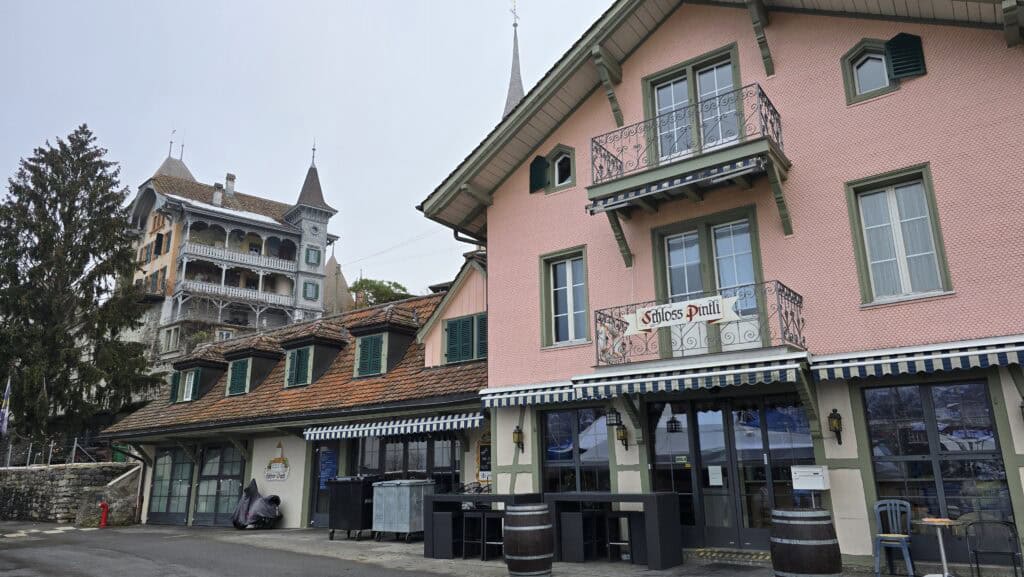
Spiez on a Foggy Day: Free Castle Views & The Essential Food Stop
Spiez is a wonderful example of why this “Hop-On Hop-Off” adventure is so flexible. Even on a misty winter day, the town retains its charm, with the majestic Spiez Castle standing guard over Lake Thun. As you’ll see in the video below, a key benefit is that you can view the castle from the outside and walk the grounds completely free of charge, making it an easy, quick, and rewarding cultural stop before moving on.
However, as we emphasized in our practical warning, planning your meal is crucial, especially in the off-season. This stop proved our point perfectly: you’ll notice many lakeside cafés and restaurants were closed or quiet. This is why we quickly made the decision to eat immediately upon arriving near the Spiez Train Station, not down by the pier!
You’ll see myself and Gabriel enjoying a warm, welcome plate of Raclette at a cozy spot near the station. This provided the perfect energy and warmth needed before heading down the hill to the quiet pier to catch our boat to Thun.
🎥 Watch Our Spiez Stop in Real Time
Get a real feel for the atmosphere, the free castle walk, and see exactly where we found a warm meal before embarking on our scenic boat cruise across Lake Thun!
Watch the video directly on this page, or click here for viewing on YouTube (ideal for mobile users): https://youtu.be/LNd9gAs8jj4.

🏞️ Thun: The Perfect Hub for Transit and Shopping
Thun is a vital stop on the Green Train of the Alps itinerary and an excellent hub for two key reasons: its beauty and its unparalleled convenience.
The best part about arriving in Thun by boat is the logistics: the boat pier is located right next to the train station and the entrance to the historic center. This makes transferring to your next train or beginning your exploration exceptionally quick.
Thun’s center is notably more active than Spiez, even in the winter. While Spiez offers a picturesque castle view, Thun delivers a beautiful medieval Old Town perfect for a stroll and shopping (we can confirm the shops were open!). You can explore the central streets, admire the distinctive architecture, and even visit the famous Thun Castle if time allows.
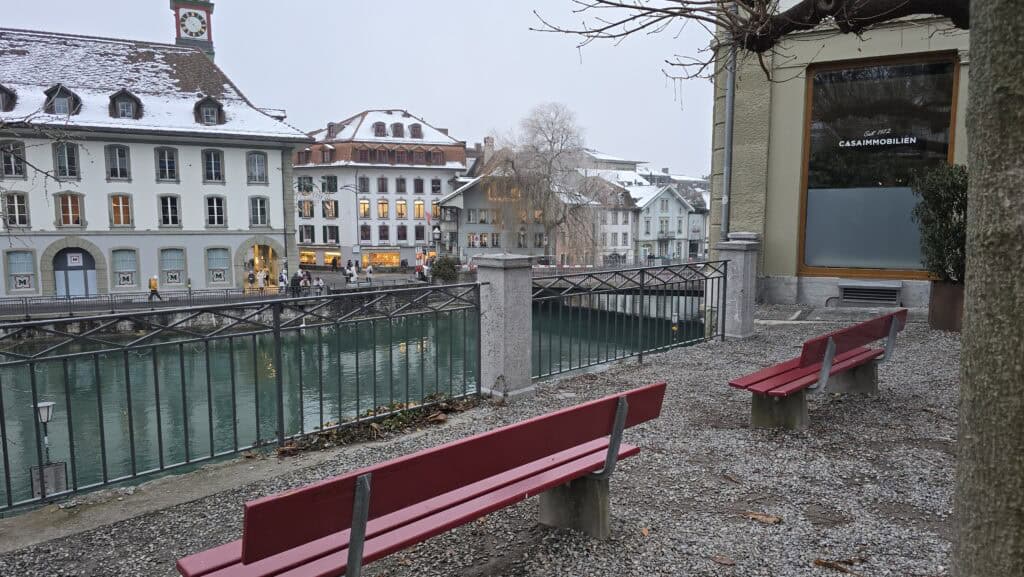
The Geographical Advantage: Docking on the River Aare
The quick transfer in Thun is due to a smart piece of geography: the boat pier is situated precisely where Lake Thun flows into the Aare River. As your boat approaches the town, it enters this short stretch of the river (where the pier is located) before turning around. This unique positioning places the docking station (clearly marked BLS) right at the gateway to the Old Town and steps from the train station, confirming why Thun serves as such an efficient transit point on your itinerary.
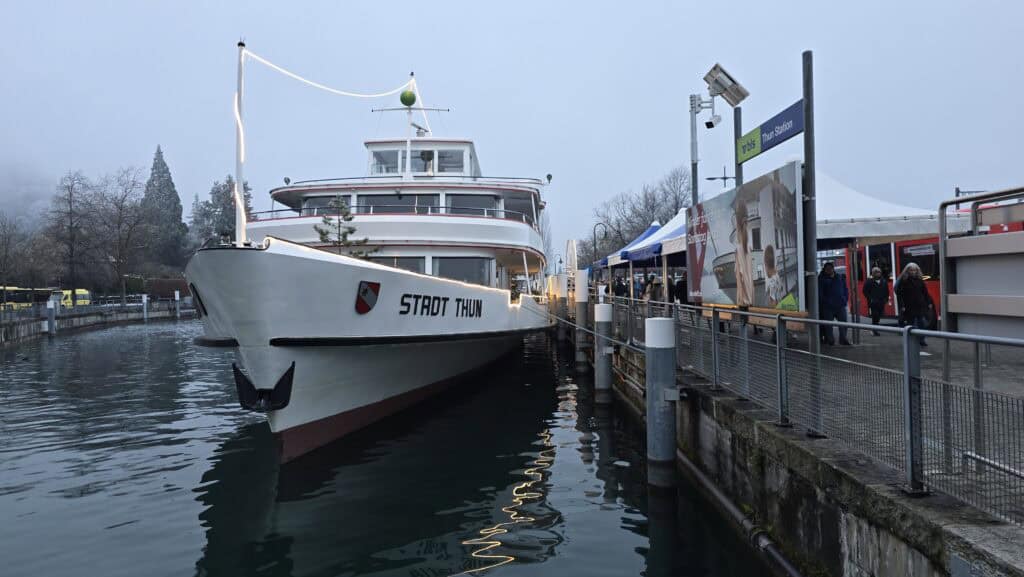
The One-Day Dilemma: Making Choices
While Thun is beautiful, you must be realistic about a single-day, multi-stop itinerary. Attempting to see everything (the center, the castle, and the churches) will be difficult.
Our best advice is to make choices:
- Option A (Quick): Stroll through the Old Town and immediately take the train to your final destination (like Bern).
- Option B (Deeper): Focus your time here, enjoy a longer walk, and visit the exterior or courtyard of the castle, saving other stops for a future trip.
If you genuinely want to explore Thun, Spiez, and Bern thoroughly, consider booking a multi-day trip (2 or more days) to enjoy the area without rushing.
How quick is the transfer between the boat pier, train station, and city center in Thun?
Extremely quick and efficient. The boat pier (after your cruise across Lake Thun) is located right next to the train station. The entrance to the historic center, shops, and restaurants is also immediately adjacent. This makes Thun the perfect transportation hub if you need to quickly catch a train back to Bern or Domodossola, or start exploring immediately.
Is Thun’s center worth visiting for a quick walk and shopping?

Yes, it is definitely worth it, especially in winter. Unlike some smaller stops, Thun’s center is notably active, with many shops open even during the low season (we confirmed this by doing some shopping!). You can easily enjoy a quick, scenic walk along the Aare River and through the Old Town, which provides a lovely atmosphere and excellent opportunities for browsing.
Can I thoroughly visit Thun Castle and do all the other Green Train stops in one day?
No, it is very difficult. If your goal is a full single-day, multi-stop itinerary (Domodossola → Spiez → Thun → Bern), you will have to make choices. Thun Castle is a significant landmark and requires time to visit properly. If you wish to see the Castle in depth, you should consider limiting your exploration to the exterior/courtyard, or skipping the Spiez stop entirely to dedicate more time here. For a truly relaxed experience that includes castle tours and in-depth exploration, a multi-day trip is essential.
🐻 Bern: The UNESCO Capital – Grandeur and Walkability
Bern, the capital of Switzerland, is the grand finale of the “Green Train of the Alps” journey. It is a UNESCO World Heritage Site, famous for its medieval architecture, arcades (Lauben), and fountains.

As the photo shows, Bern is an easily navigable and highly scenic city to explore, even when your time is limited. The historic center’s beautiful, wide main streets, flanked by the characteristic medieval arcades, lead directly from the station to the iconic Zytglogge (Clock Tower). Unlike sprawling cities, Bern’s historic core is beautifully contained, making it an ideal destination for a quick visit.
The Zytglogge and the Heart of Bern
The highlight of any quick visit is Bern’s Zytglogge, the city’s famous medieval astronomical clock tower. While the main streets are perfect for a stroll, the area around the clock is always bustling. The short video below captures the charm and the movement of the tower, along with glimpses of the atmospheric city center.
🎥 Watch Our Quick Look at the Zytglogge: 🇨🇭 Bern: Where Time Stands Still (and Then Comes to Life!) ⏰ #Bern #Switzerland #Zytglogge #Travel
The highlight of any quick visit is Bern’s Zytglogge, the city’s famous medieval astronomical clock tower. The figure show, where mechanical figures emerge and rotate, occurs a few minutes before the hour (e.g., just before 10:00 AM, 11:00 AM, etc.).
⚠️ Crucial Tip: Manage Your Expectations
While waiting for the clock to strike is a charming and unmissable moment—and a great photo opportunity, as everyone gathers in the square—you must manage your expectations about the “show.”
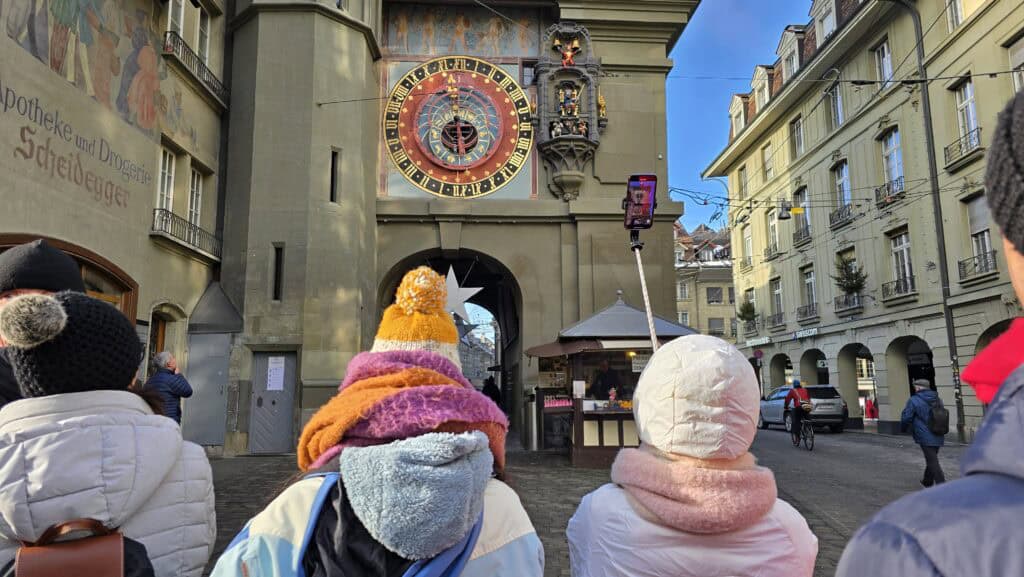
We sincerely thought it would be a major, grand spectacle but the mechanical figure movement is actually quite minimal and brief. When the movement ended, I was still waiting for more, and Gabriel turned to me and asked, “Is that finished?” My response was, “No, it can’t be!”—but it was! While it’s a sweet, historic tradition and definitely worth seeing, don’t let the expectation of a huge show detract from the stunning beauty of Bern itself!
Instead, appreciate the moment for what it is: a beautiful, historic tradition that marks time in a UNESCO World Heritage city. Don’t let the expectation of a huge show detract from the stunning beauty of Bern itself!
Shopping and Seasonal Charm: Beyond the History
Beyond the historic Zytglogge and the UNESCO architecture, Bern’s center is vibrant and offers extensive shopping opportunities in its historic arcades (Lauben). This makes it a great destination for a walk and some retail therapy.
Seasonal Highlight: If you are traveling during the winter, you will likely find various charming markets throughout the city center. These markets add a wonderful atmosphere and provide extra opportunities for exploration, food, and unique souvenirs, ensuring there is plenty to see and do beyond the main historical sites!
The Practical Hub: Bern Train Station
The convenience of Bern begins the moment you step off the train. Bern train station is not just a transit point; it functions like a large commercial center (or mall). This is a huge benefit for travelers with limited time, as it offers essential services right upon arrival:
- Shopping and Dining: The station is filled with numerous shops and eateries where you can grab a quick drink or a snack before or after your city exploration.
- Essential Services (Toilets): Crucially, if you need a public restroom, facilities are available within the station. A practical tip: Remember to carry your credit card! Access to the public toilets is typically managed by a small fee payable via credit card.
Once you exit the modern station complex, you emerge onto a large square (the Bärenplatz area) from where your adventure into the beautiful, historic UNESCO Old Town begins, leading directly to the iconic Zytglogge.
The Alpine Contrast: Dressing for Bern
While the Green Train journey itself offers the spectacular beauty of snow-capped Alps in winter, you must be prepared for the cold upon arrival in Bern. Though the city center is beautiful and walkable, the temperatures can be quite low.
Practical Tip: Look at the people in the picture—they are all well-dressed! Remember to wear warm clothing, gloves, and a scarf to fully enjoy your walk through the historic streets and arcades without getting chilled.
I only have a short time after arriving at Bern station. What is the single most essential and easily accessible thing I can do or see there?
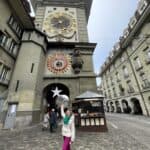
The best thing to do upon arriving in Bern is to walk directly to the Zytglogge (Clock Tower).
The historic center of Bern is a UNESCO World Heritage Site, famous for its arcades (Lauben) and fountains. The Bern railway station is conveniently located right next to the historic Old Town, making the entire area highly walkable.
🕰️ The Zytglogge Experience:
Walkability: You can easily walk from Bern station through the beautiful medieval arcades until you reach the Clock Tower.
The Clock Tower (Zytglogge): This iconic landmark features a fantastic astronomical clock and is the heart of the city.
The Mechanism: The most exciting part is the famous carousel-style figure play that happens a few minutes before the hour, where figures emerge to put on a small show. It’s an unmissable spectacle and a perfect quick stop before continuing your exploration or heading back to the train.
A Boat Trip on Lake Thun: Included, Elegant, and Convenient
Upon arriving in Spiez or Thun, you can embark on a boat trip and cruise on the crystal-clear waters of Lake Thun. This is an excellent opportunity to admire the Alps from a different perspective and relax after your train journey.
Crucially, the boat trip on Lake Thun is already included in the price of your Green Train Day Pass (BLS) or multi-day ticket! You do not need to purchase a separate ticket for the scenic cruise, simplifying your planning and maximizing the value of your pass. Just present your Green Train ticket to the boat staff.
A Pleasant Surprise Onboard (But Budget Accordingly)
While the vessel may look like a simple ferry from the outside, the interior of the Lake Thun cruise ship is surprisingly beautiful and quite elegant, as you can see in the photo. The ship features a comfortable, multi-level design with dining tables and a bar.

Important Budget Note: Although the cruise ticket is included in your day pass, any food, drinks, or catering services you order onboard must be paid for separately. So, if you plan to enjoy a full meal or a glass of wine on the beautiful vessel, remember to budget accordingly and bring cash (Swiss Francs) or a credit card.
Useful Information
- Best Time to Travel: Spring and summer are the ideal times to travel on the Green Train when the weather is milder, and nature is at its best. Anyway, you can embark on this beautiful adventure in winter.
- Booking: You can book your trip directly on the Green Train website or through a travel agency.
- What to Bring: We recommend bringing comfortable and warm clothing, hiking boots, a camera, and binoculars to fully appreciate the scenery.
- Onboard Services: Onboard the train, you will find a catering service and a children’s play area.
How Does the Green Train Work?
The Green Train of the Alps is a fascinating tourist attraction that offers a unique way to explore the beautiful mountains of South Tyrol. Equipped with a vintage steam locomotive and antique carriages, this picturesque train travels along scenic routes, offering breathtaking views of unspoiled nature and quaint Alpine villages. Passengers can enjoy a slow and relaxing journey, taking in the views as the train winds through green valleys, rushing rivers and picturesque bridges. It is an unforgettable experience for anyone who wants to immerse themselves in the beauty of the Alps authentically and fascinatingly.
How to buy a ticket on the BLS website
- Access the BLS website: Visit the official website of the Swiss Federal Railways (BLS) and look for the section dedicated to the Green Alpine Train.
- Choose your ticket type: You can choose between daily or 2-day tickets.
- Select your travel date.
- You will be asked for passenger data
- Proceed to checkout: Complete your purchase using a credit card.
Important: Procedures may be subject to minor changes over time. We recommend always consulting the official BLS website for the most up-to-date information.
Travel Options: 1 or more days
- Day trip: If you have limited time, you can opt for a day trip that will allow you to discover the main attractions along the route. For prices and details, please visit the website: [Link to Daily Ticket]
- Multiple days: For a more complete experience, you can choose to travel for multiple days, stopping at various locations to explore the area and experience local traditions.
Beyond the Alps: The Charm and Challenges of the Little Green Train
The journey aboard the Trenino Verde delle Alpi, from Domodossola to the heart of Switzerland, is an experience that offers fairytale scenery, including snow-capped peaks, medieval castles, and the enchantment of Alpine lakes. This tour immerses you in a unique atmosphere, moving from the modernity of Thun to the historic charm of Bern’s arcades in a single day.
However, to turn this dream into a splendid reality without unexpected events, rigorous planning is essential: the beauty of the Swiss landscape comes with significant costs and logistical management that doesn’t allow for improvisation. From the perils of winter weather, which can obscure the view under a thick fog, to the costs of food and transportation, which can significantly impact the budget, this diary was created precisely to offer practical advice and honest reflections, so that every traveler can enjoy the spectacle of the Alps with the right awareness and maximum pleasure.
Important note on budget: In our experience, lunch planning makes a huge difference. Last year, by choosing to have lunch ashore and taking the boat in the afternoon, the overall cost was significantly lower, as we avoided both the high price of the onboard restaurant and the need to pay for a first-class upgrade. While dining while cruising is a wonderful experience, it’s a choice that can significantly impact your budget.
Here is our story in real time, as we experienced it.
Video: The TRUTH about Switzerland: Green Train, Fog & Budget Tips! 🇨🇭 | Expectation vs Reality
They say a picture is worth a thousand words, but a video captures the cold, the fog, and the real magic that photos sometimes miss. Before you dive into the details of our itinerary, watch the visual story of our journey—the expectations, the reality, and the unexpected beauty of the Swiss border.
Watch the video directly on this page, or click here for viewing on YouTube (ideal for mobile users): https://youtu.be/4cjnZwfN64Y.

An Enchanting Winter Adventure 2025 on the Green Train of the Alps, but a bit pricey
On December 29, 2025, our adventure begins at 6:32 a.m. from Verbania Pallanza, heading for Domodossola. From there, at 7:58 a.m., we’ll board the Trenino Verde delle Alpi (Little Green Train of the Alps) with the goal of reaching Thun, where we’ll enjoy a tour of the lake and end the day in Bern. The choice of arriving in Thun is strategic, as the town is the main departure point for the boats that ply the lake.
Planning this leg requires precision, as during this period the boat makes a single complete journey along the lake, departing from Thun to Interlaken and then returning. Since the intermediate stops are served only once on the outward and return journeys, time management is essential. Although the return journey by water takes place in the early afternoon, spending two hours on board for the outward and return journeys would take up the entire day. To optimize your time, it’s definitely more convenient to rely on the rail network for further travel.

Switzerland is famously expensive, but the 12th-century Thun Castle (built around 1190) is actually one of the more affordable spots to enter. Even if the weather is foggy and the famous Alpine views are hidden, as I experienced on my recent journey, the history and the “moody” atmosphere still make it a cool stop.
Is it pricey? Yes, the total day can easily reach €400 per couple.
Is it cloudy? Often in winter, as the fog can hide the peaks even when the sun is shining elsewhere.
Is it still charming? Absolutely. 🇨🇭✨
Author Tip by Ila: If you are visiting between December 25th and January 4th, the castle has special winter opening hours from 1:00 PM to 4:00 PM. Verify prices on the official website: https://schlossthun.ch/
This way, you can spend the middle of the day admiring the beauty of the lake and then diversify your visits. You can choose to explore Thun Castle, which has reduced opening hours from 1:00 PM to 4:00 PM in winter, or head to Bern. Given that the sun sets early this season, arriving in the capital in the late afternoon allows you to immerse yourself in its charming evening atmosphere, making your itinerary much richer and more varied.
Gabriel wanted to stop in Spiez for a fondue, but getting off there would mean missing much of the panoramic views offered by the lake cruise. Being an intermediate stop, a stop in Spiez would prevent him from admiring the entire scenic stretch of the lake. Furthermore, during the winter season, the village appears almost deserted and the castle remains closed to the public, limiting visits to the courtyard and the panoramic terrace overlooking the water. These are ideal for a few photographs but not enough to fill an entire afternoon. Even to find a simple café or restroom, one would have to walk up from the lakeside toward the station, a ten-minute walk.
To optimize our time, we decided to eat directly on board the boat during the two-hour cruise. We’ll check out the menu once on board, confident we’ll find the same table service we’d enjoyed on the previous trip. This solution allows us to avoid having to plan our stops in advance, maintaining a certain flexibility. The only crucial precaution remains strict monitoring of train schedules, as with only one daily boat trip each way, the train remains the only viable option for continuing our tour between the various destinations.
Last year’s experience served as a lesson: due to thick fog, we were forced to change our plans at the last minute, visiting Bern in the morning in the hope that the weather would improve in the afternoon. Unfortunately, the fog didn’t lift, and, arriving in Spiez just after the ferry departed, we had to wait hours for the return trip to Thun. Despite the mysterious allure of that day, much of our time was wasted; so today we carefully checked the forecast, which promised bright sunshine and a much better experience.
As for the journey to the station, between 6:30 and 7:00 a.m., the road from Verbania to Domodossola is generally clear and very smooth, allowing you to arrive on time and stress-free, although leaving a little early is always the most prudent option. Once you arrive in Domodossola, it’s easy to find a parking spot in the numerous paid parking lots located near the train station, where parking meters allow you to conveniently set your parking time based on your expected return time.
We arrived at the station around seven in the morning, leaving us plenty of time to enjoy breakfast at one of the nearby cafés. This allowed us to calmly wait for the 7:58 train, ready to finally begin our tour.
We purchased a second-class day ticket for the BLS train online directly from the official website, entering the travel date and the names of the passengers. Initially, I was concerned that tickets needed to be activated before departure, but upon confirmation at the ticket office, we discovered that this wasn’t necessary: the QR code we received by email was already valid, as it’s valid for the specific day selected during purchase, from 12:00 AM to 12:00 AM.
There’s also the option of purchasing a two-day ticket, an option I highly recommend for those staying overnight in Bern, allowing you to explore the region at your own pace. With an extra day, you could explore the castles or take the funicular up to the viewpoints above Interlaken to admire the Alps and the lake from above. Furthermore, if you plan ahead, you could even book a visit inside Bern’s famous Clock Tower.
We arrived at the Domodossola station around 7:30 a.m., and since it’s December, it’s decidedly cold outside. Fortunately, the station offers sheltered, heated waiting rooms where we can sit comfortably. Gabriel, with his desire for a leisurely breakfast, encouraged us to get up very early, but in the end, it was a good thing: I had time to write these notes, and we’re sure we won’t miss the train. Besides, it wouldn’t have made sense to take an earlier train: the boat leaves only in the late morning, and Thun Castle opens in the afternoon, so arriving too early wouldn’t have allowed us to do much more.
Although winter is harsh and the Alpine peaks appear completely snow-capped, it’s not necessary to wear technical ski gear for this itinerary. Our tour takes in only the lakeside towns and the historic center of Bern, where the streets are usually clean. Layers are ideal: a warm sweater under a heavy jacket and comfortable pants. As for footwear, sneakers or ankle boots are sufficient, as long as they are paired with thermal or thick socks to protect you from the cold while walking.
At 7:42, the darkness of the night finally began to lift. From the Domodossola station, the outlines of the Alpine foothills began to appear, bathed in the bright, purplish glow of dawn. The 7:58 train arrived right on time. Since there were four of us on board and the train was already quite crowded, we couldn’t all sit together in the traditional four-seater compartment; however, we had no trouble finding two pairs of seats side by side, sitting a short distance from each other, next to other passengers.
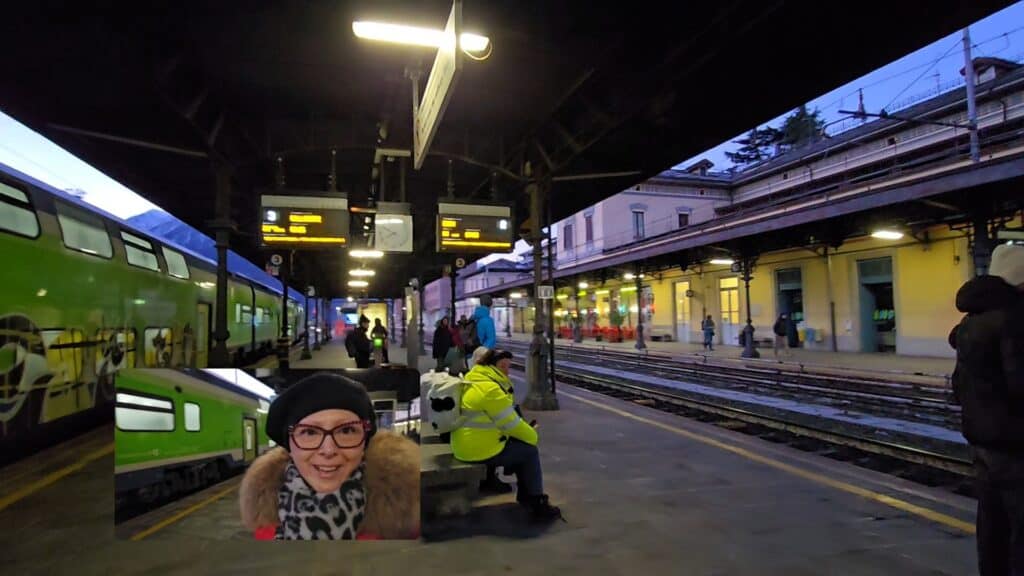
At 8:07 a.m., the train conductor came by, and we showed him the QR code for our ticket, purchased online directly from our phone. A ticket is therefore a QR code for each passenger.
The first stretch of the train passes through the villages near Domodossola, heading towards Switzerland. We then pass through the valley where the houses are located. This stretch is therefore more urban and less scenic, even though we’re in the Prealps.
8.12 The sunlight begins to shine directly on the mountaintops, and we can begin to savor their beauty. The snow also reflects the light.
It’s 8:19 a.m. During this first, less scenic stretch, I take advantage of the opportunity to rest a bit. The day is long, and we need energy.
The train heads toward Brig, arriving at 8:33. While the first stretch was slow, the train is now accelerating as we leave the first stops, which were close together.
At 8:20, I received a welcome message from Vodafone on my phone. That’s fine, because I have Switzerland included, but if your plan doesn’t include Switzerland, you might want to disable roaming.
We arrived in Brig at 8:30, slightly ahead of the scheduled 8:33. A very useful aspect of this journey is the efficient announcements: a few minutes before each stop, the next stop is clearly announced in three languages: German, Italian, and English.
Brig is a fairly large hub, and many passengers disembark here, especially the numerous cross-border commuters who use the train to get to work. Thanks to this turnover, the two people sitting in front of us gave up their seats, allowing our group of four to finally reunite in a single compartment. It’s interesting to observe the diversity of travelers: there are commuters heading to the office, winter sports enthusiasts ready for the slopes, and tourists who, like us, are enjoying a scenic tour.
Compared to last year, we notice there’s less snow: back then, the entire valley was covered in a blanket of white, while this year, almost exclusively the peaks are covered in snow, with only a few slopes. Despite this, the landscape remains enchanting, and this change makes the experience different and new every time. Around 8:53, we begin to pass through a series of tunnels: every time the train emerges, a spectacular view opens up before us, with the mountain peaks glistening in the sun.
A very useful practical note concerns the onboard restrooms, which are easily located thanks to the arrows in the carriages. In my case, the restroom is located in the adjacent carriage, and the signaling system is extremely convenient: a light clearly indicates whether the restroom is occupied (red) or free (green), allowing you to move only when it is actually available.
I found the space very clean and well-organized; in addition to toilet paper, there’s a sanitizing spray for the toilet bowl, a detail that allows every passenger to maintain a high level of hygiene. The sink is equipped with sensors for water, soap, and a hand dryer: everything you need for comfortable and worry-free use.
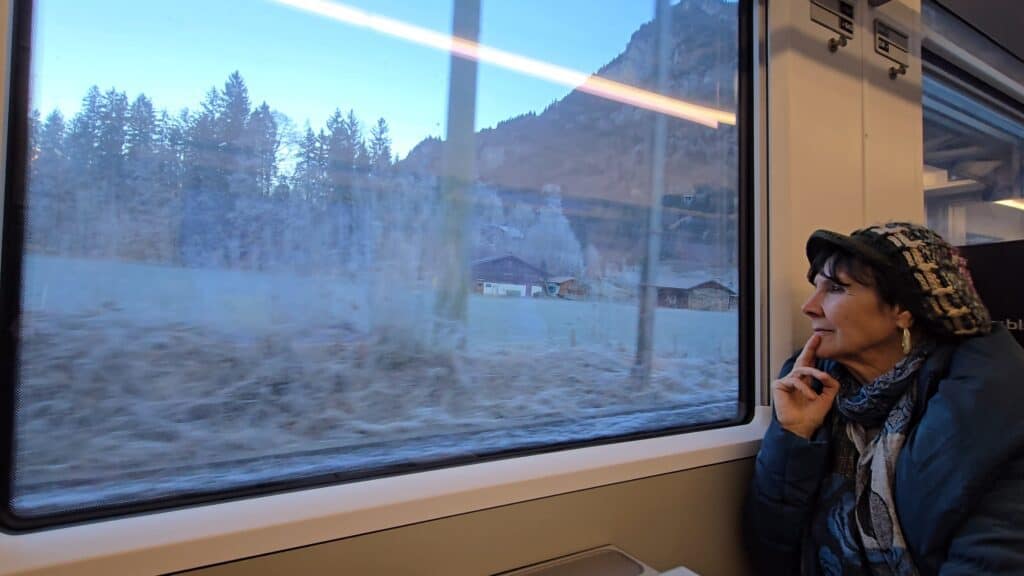
At 9:11, we approach the Kandersteg station, scheduled to arrive at 9:13. Here, the landscape changes dramatically: being in the heart of the Alps, snow covers the entire valley, creating a magical and distinctive atmosphere. Evocative images pass by the window: snow-covered tennis courts—definitely out of season for a match—and a charming old Bavarian-style hotel, framed by jagged, snow-covered Alpine peaks.
Today’s temperatures confirm the region’s typically wintery climate: in Thun temperatures will fluctuate between -3°C and 5°C, in Spiez between -2°C and 6°C, while in Bern the cold will be more biting, with lows of -4°C and highs that won’t exceed 1°C.
At 9:31, we cross the Reichenbach area, where the sun gives way to a thick fog . The first hills are still visible, but the mountain peaks disappear into the gray. Despite this sudden change, the landscape retains a magnetic charm: watching the world outside the window, staying in the warmth of the carriage while the freezing cold outside bites, is a truly pleasant experience.
After the stop in Brig, the train has emptied considerably. We now have plenty of space, so much so that each of us can occupy two seats. This freedom allows us to move easily from one side of the carriage to the other to take photos of the panoramas unfolding behind the large windows.
After passing the Spiez station, we notice that the weather isn’t exactly the sunny one we’d predicted: a light haze envelops everything. However, this time we won’t be changing our plans like last year. Even if the sun takes a while to rise, we’ll still board the boat after visiting Thun. Even without seeing the highest peaks, we’ll admire the life that flows along the shores, the characteristic villages, and the unique atmosphere of this lake nestled in the Alps.
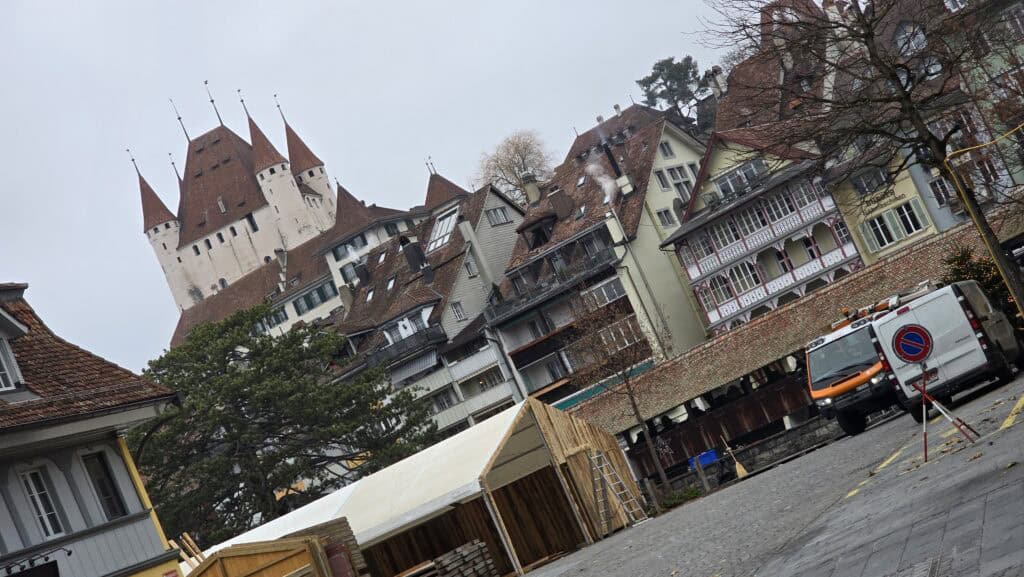
We arrived in Thun promptly at 9:58. The town is a perfect blend of modernity and tradition: starting from the station and heading towards the historic center, you cross a charming stream before entering the ancient buildings. It’s a perfect place to stop, full of welcoming bars and shops. As a note for travelers at the end of 2025, the castle has reduced opening hours during the winter, from 1:00 PM to 4:00 PM.
Thun also proves to be an excellent shopping destination. Although Switzerland is generally expensive, prices are more affordable here, and during this sales period, you can find some great deals. For example, we found thick thermal socks for just 4 francs thanks to a 50% discount, and good-quality shoes starting at 50 or 60 euros. There’s certainly no shortage of luxury items for 200 or 300 euros, but for those looking for practical purchases, like sneakers or winter boots, the prices are not at all prohibitive, especially considering the Swiss context.
While Thun offers interesting shopping opportunities, restaurant prices quickly fall into line with Swiss standards. When entering a restaurant to warm up, it’s important to also consider the kitchen’s opening hours: at 10:36, for example, we couldn’t order a toasted sandwich because the kitchen only opens at 11:00.
We therefore opted for the ready-made products at the counter, a practical choice for satisfying hunger without waiting. To give you an idea of the costs, a hot chocolate made from a sachet costs about 7 francs, while a filled toastie starts at 15 francs for a small portion and goes up to 20 francs for a full-sized one.
We took a break to recharge our batteries and warm up a bit. Swiss hot chocolate is different from the thick, creamy kind we’re used to in Italy; it’s more of a chocolate milk, but it’s often accompanied by a chocolate bar on the side that enhances its flavor. In total, for three hot chocolates, a sandwich, and an espresso macchiato, the bill came to 32.90 francs.
A useful detail for tourists is that the receipt often shows double the total: in our case, the bill was €36.56. Despite the expense, it was a necessary stop to refuel before continuing our exploration.
Not far from the Globe Trotter is one of Thun’s most picturesque vantage points : from here, you can admire the riverside skyline, with its historic buildings reflected directly in the water. It’s a perfect spot for a souvenir photo, thanks to the red “Grand Tour of Switzerland” frame featuring the city’s name, with the castle and characteristic houses in the background.
With a short walk of less than five minutes, we returned to the station, heading to the pier directly across the street. It’s 11:20 a.m. and the boat leaves at 11:40; we’ve made the trip early to ensure we’re among the first to board and get a good spot. Our goal is to snag a table by the window, so we can enjoy lunch comfortably without losing sight of the view. Even though the sky remains gray and overcast, the cruise will still allow us to observe life on the lakeshore and its picturesque villages up close.
The gates opened at 11:26 a.m. Despite the long line, we managed to board quickly. Since it was almost lunchtime, the tables inside filled up quickly, especially since the biting cold made it impossible to stay on the outside deck.
We noticed that many seats were already reserved; therefore, a valuable tip for those taking the 11:40 train is to reserve a table in advance to avoid any worries. Fortunately, the onboard staff was very kind and helped us find the last available table.
The decision to eat lunch on the boat proved to be a winning one: given the large crowd, having a table to eat at guaranteed a warm seat, which would otherwise be difficult. However, it’s important to know the class rules: with a second-class ticket, you can only access the ground-floor restaurant. Since we couldn’t find a seat, we sat on the first floor, which is reserved for first-class passengers.
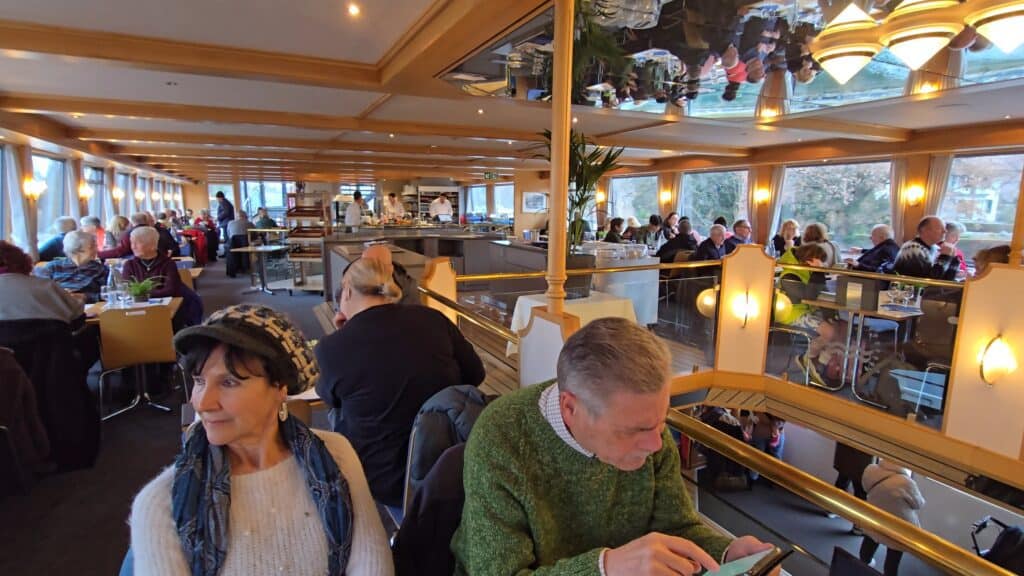
The conductor allowed us to stay, but we had to pay an upgrade of about 20 francs each (41 francs total for two people). When paying, we were asked which stop we would get off at, and we opted for Spiez. Although our initial plan was to tour the entire lake, the persistent fog made us think the full tour is more enjoyable in summer; for today, Spiez was the ideal destination.
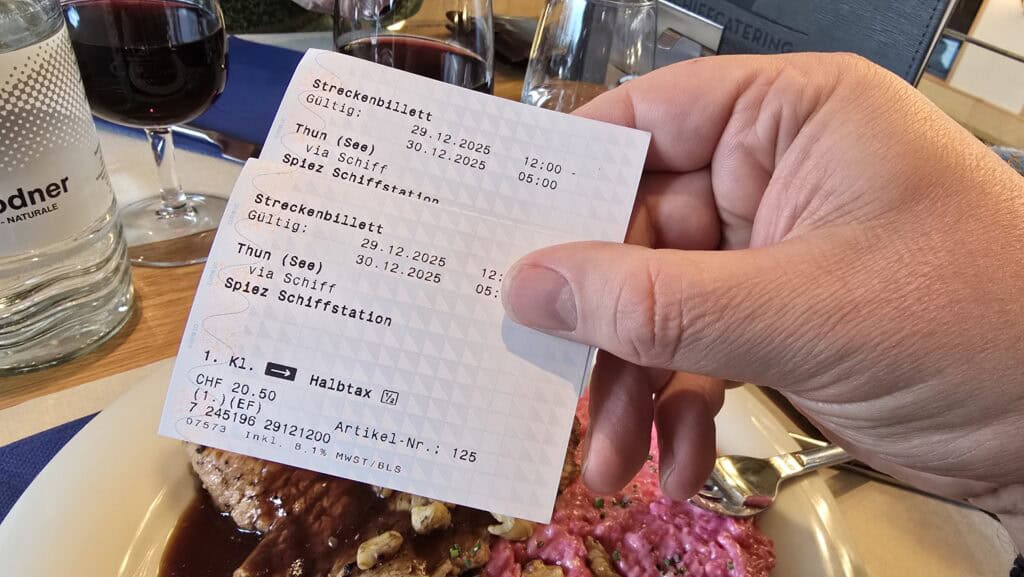
The service on board was lightning-fast: the dishes were on the table within minutes. We ordered a risotto, a fish dish with rice, and two portions of meat with rice. The portions were generous, almost like one-course meals, and we were satisfied with the quality. The total bill for four people was 169.90 francs (about 193 euros), plus a tip , which is not mandatory in Switzerland, but is customary to leave at checkout. It’s not a cheap option, but dining while sailing is a worthwhile experience.
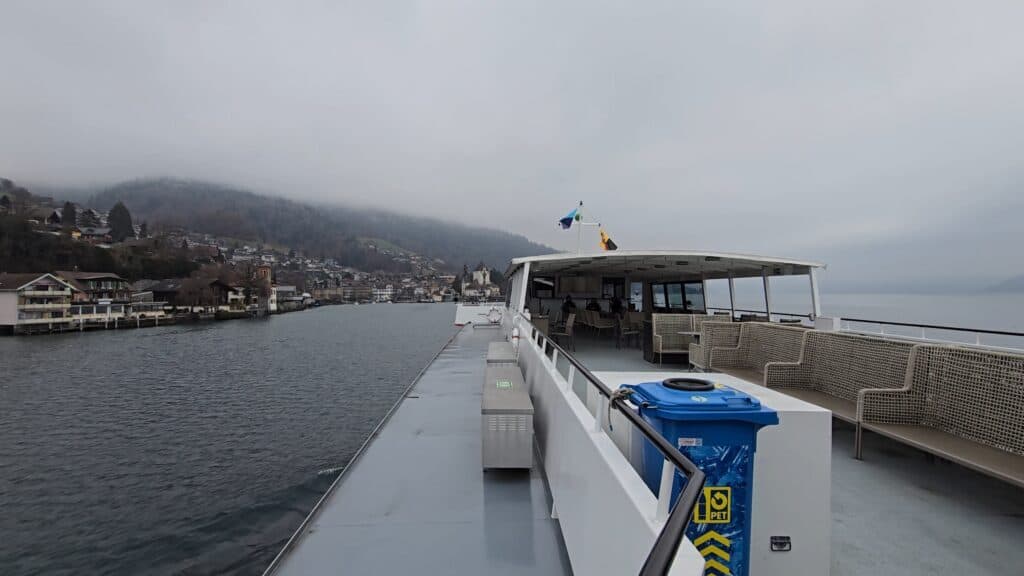
We disembarked in Spiez at 12:30, right at the foot of the castle. Although the castle is closed in winter, we strolled through the courtyard, enjoying the view of the lake, and took several photos despite the dim light and the haze.

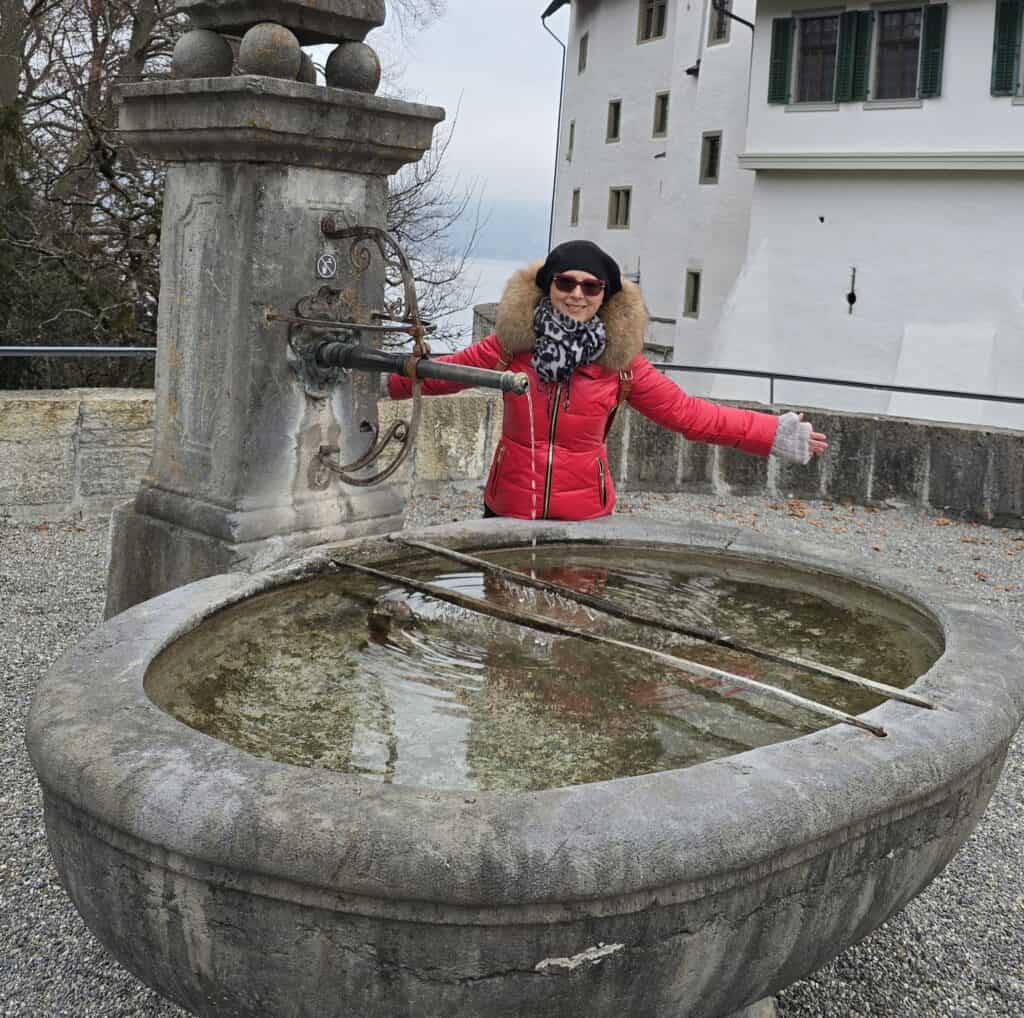
Around 12:49, we headed to the station, which is about a 10-15 minute walk from the lakeside.
In conclusion, here’s a golden tip: if you want to take the 11:40 boat to Thun with a second-class ticket, arrive at the boarding gate at least 20-25 minutes early. Getting in line early , even if it’s cold, will allow you to be among the first to board and secure a table near the ground-floor window, thus avoiding the cost of an upgrade. We ate in exactly one hour, the minimum amount of time necessary to avoid having to rush to disembark. If you’re not in a hurry and the weather isn’t perfect, you could also consider having a fondue right in Spiez, but the thrill of a lunch on the water remains unmatched.
Reflecting on the day, we concluded that spring or summer are the ideal seasons to fully enjoy Lake Thun . Despite favorable forecasts, fog is common in winter and risks not doing justice to the lake’s panorama, making the ticket investment less worthwhile for navigation.
On the other hand, winter remains the perfect season for a train ride through the snow-capped Alps: a magical experience worth trying at least once. However, in the future, we will plan this trip for a warmer time of year, so as to take advantage of the advantages of each season and better enjoy the lakeside.
The contrasting temperatures today are striking: in Spiez, it’s 0°C and hazy, while in Verbania, on Lake Maggiore, the sun is shining and the temperature is a full 9°C. In December, it might be worth enjoying the beauty of our homeland, Italy, but crossing the Alps by train in the snow remains an unparalleled experience.
Heading back to the Spiez station, we noticed the Krone restaurant, where we’d had fondue the other time. It’s a great place to stop, as unlike the lakeside restaurants, which are almost all closed in winter, this one stays open. The train station is very functional: it has clearly marked restrooms, a sort of canteen/restaurant, a small supermarket, and ATMs for withdrawing both francs and euros.
At 1:50 PM we took the train to Bern, but with the idea of stopping again in Thun to visit the castle. Although the opening hours are usually shorter in winter, the official website ( schlossthun.ch ) indicates a special opening every day from December 25th to January 4th, from 1:00 PM to 4:00 PM . We arrived in Thun at 1:58 PM and, according to Google Maps, the castle is about a twelve-minute walk from the station.
One final observation should be made regarding the management of the boat we took at 11:40. The organization seemed unusually poor by Swiss standards: the staff allowed an indefinite number of passengers on board without guaranteeing everyone a warm seat, which created considerable inconvenience, especially in winter, when sitting on the outside deck was impossible.
We were seated in first class by an attendant, only to be told by a second inspector that we would have to pay the difference out of pocket. Between the cost of lunch (at least €100 per couple) and the upgrade fee, the expense becomes significant, especially if you only have an hour of sailing before disembarking and it’s a cloudy day. To make the experience feel like a true vacation and not a frantic rush, it’s essential to arrive at the boarding gate well in advance or to reserve your table carefully.
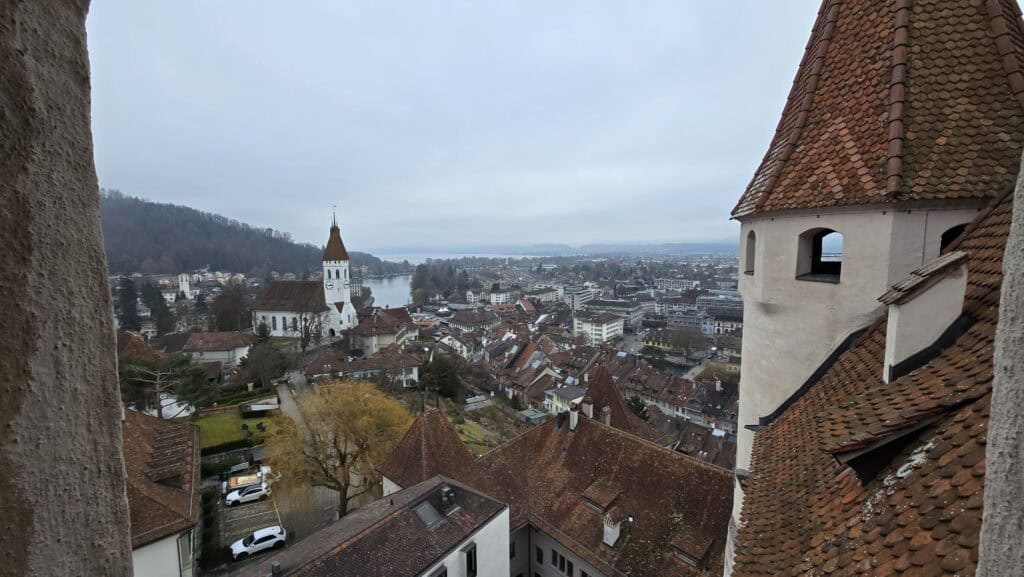
From the station, Thun Castle can be reached on foot in about ten to fifteen minutes. The route involves a fairly long and steep staircase, which may require a few stops for those unfamiliar with the climb or those with mobility issues. However, for those who prefer a more comfortable option, an elevator connects the paid parking lot at the base of the hill directly to the fortress entrance. Once there, you’ll be greeted by a panoramic view of the city.
Tickets can be purchased at the ticket office, with discounts for seniors and people with disabilities (upon presentation of the appropriate card).
The tour winds vertically inside the medieval tower, originally built around 1200 by the Dukes of Zähringen and later passed to the Counts of Kyburg.
We chose to visit only the castle, skipping the temporary exhibition, so as to have enough time to explore Bern. Even without an audio guide, exploration is easy thanks to large information panels in English, French, and German.
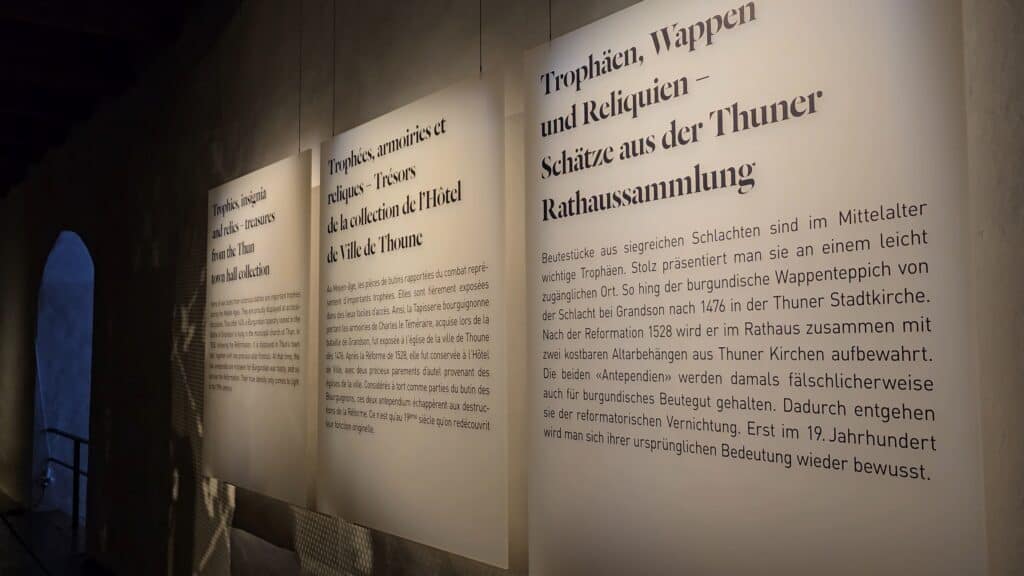
The castle’s first room houses historical artifacts and an interactive screen illustrating the city’s demographic evolution. Climbing the evocative spiral staircase, typical of towers, you’ll find a room dedicated to medieval banners and war flags, once kept in the town hall. Here, an ingenious book-shaped panel allows you to virtually browse chronicles of ancient battles.
Continuing the ascent, you discover how the castle was used between 1384 and 1798 as an official residence and symbol of power. These rooms display portraits of the owners, family trees, coats of arms, and period furnishings. On the upper floor is the majestic Knights’ Hall: one of the best-preserved medieval rooms in Switzerland, it features a large fireplace and ancient suits of armor.
The highlight of the visit, however, is the panoramic view at the top of the tower: from the four corners you can enjoy a spectacular view, but the glimpse that simultaneously embraces the castle and the lake is truly unparalleled.
A practical note: the free restrooms are located outside, near the ticket office, and are accessible even to those visiting only the courtyard.
At 3:04 PM, we began the descent to the station, a much easier journey than the climb. To reach Bern, we consulted the BLS app, which shows several connections; our advice is to always select the main station (simply labeled “Bern”), so you can get off directly in the city center.
Having spotted the 3:59 PM train, we took advantage of the half-hour wait to stop at the station bar: two cappuccinos and a muffin for a total of 15 francs.
Looking back on the boat experience, if you want to save money and avoid the crowds, a great alternative to lunch on board is to take the afternoon cruise. This way, you avoid overcrowding at the tables reserved for those who need to eat and can enjoy the cruise in complete relaxation, without the need for reservations or class supplements.
Now we are ready for the last stop of the day: a walk through the famous arcades of Bern to admire the famous Clock Tower .
At 4:00 PM, we boarded the train to Bern, a quick ride of about 20 minutes. This train also has restrooms and vending machines selling snacks and drinks, ideal for any last-minute needs. We arrived at Bern’s main station at 4:22 PM, right on time for the end of the line.
Bern welcomed us with the charm of its historic center: its famous arcades offer shelter from the cold and house a myriad of shops and supermarkets, where you can pick up a quick snack. Strolling through the streets of the center, we admired the characteristic fountains, each with its own distinctive statue, which create a truly unique atmosphere.
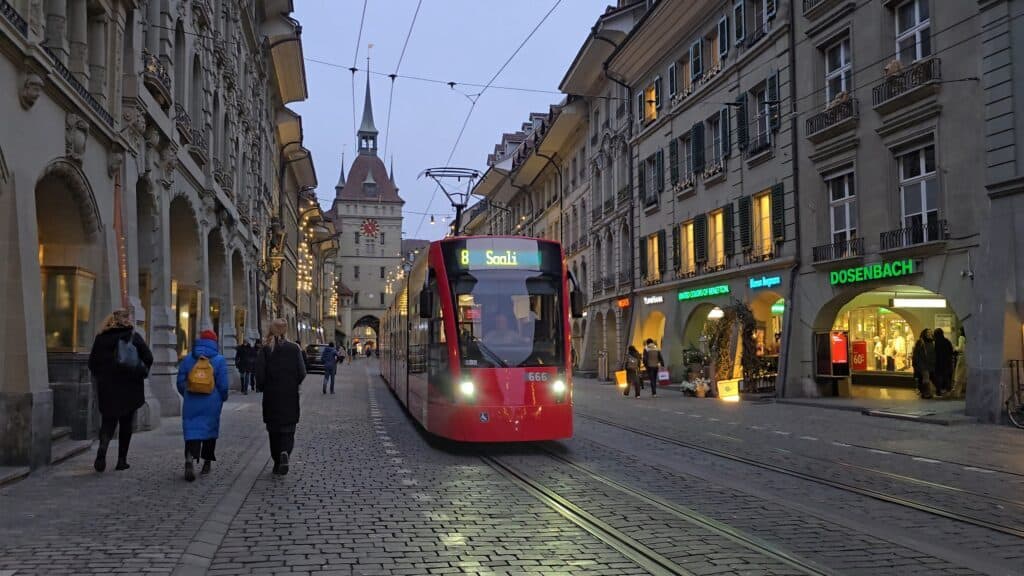
Our main destination was the Zytglogge tower , located just a five-minute walk from the station. We arrived beneath the monumental clock just before 5:00 PM. I must warn you that expectations might be disappointing. Those who have already seen it can only comment on the almost imperceptible mechanism. It is indeed very famous and one would expect something much more elaborate, but perhaps it was elaborate hundreds of years ago when it was built, but certainly not now.
Despite some skeptical comments from passersby, the puppet parade was truly captivating. Although the mechanism’s movements are minimal and the characters small, being there among so many other tourists is an unmissable tradition for anyone visiting the Swiss capital. After the hour, we strolled through the Christmas markets, whose illuminated stalls create a magical path from the tower back to the station.
We took the 5:39 PM train back to Domodossola, the last direct connection, arriving at 7:53 PM. At the end of this day, it’s worth considering your budget. A trip like this, if not carefully planned, can cost around €400 per couple for a single day.
Between the day ticket, breakfast, hot snacks needed to combat the winter chill, and lunch on the boat (which alone costs about 100 euros per couple), expenses quickly add up. Add to this any supplements for first class, castle tickets, and the cost of the panoramic funiculars, which can significantly impact your wallet.
In short, the tour on the Trenino Verde delle Alpi is an extraordinary and highly recommended experience, but it requires awareness: it’s a trip that offers panoramic views and high-level comfort, but it fully reflects Swiss cost standards. The biggest expense on a trip like this is undoubtedly food .
In 2025, a BLS day ticket for second class costs around 66 euros (rising to 90 for first class), a reasonable price for Swiss transport. However, in winter, the cold becomes a hidden cost: the need to escape to a café for a hot drink or to eat lunch indoors becomes acute. If you choose the 11:40 boat, you’ll find yourself onboard right at rush hour; here, finding a warm seat becomes almost mandatory and often requires a full meal, which is quite expensive.
For those who want to save money, the alternative of packed sandwiches is a good one, but in winter it forces you to eat outside or seek shelter in station waiting rooms, sacrificing a bit of comfort.
Another variable to consider is the weather. Despite favorable forecasts, it often happens that you leave the sun in Italy only to find a blanket of gray in Switzerland. For an Italian departing, for example, from Lake Maggiore, the comparison can be disconcerting: leaving Verbania with 11°C and full sun only to arrive in Spiez with 5°C and fog, after spending almost 400 euros per couple, inevitably leads to wondering if it’s worth it.
The answer is yes, because the Alpine landscapes and efficient trains are fantastic, but you need to be aware of your budget. For a foreign tourist, perhaps American or British, who tackles the day without any rigorous planning, the final bill can equal the cost of a four- or five-day vacation in Spain, Greece, or an entire weekend in Italy.
This price disparity explains why even the Swiss love coming to Verbania or the border towns for shopping: given the choice, they too prefer the Italian quality-price ratio. In conclusion, I wouldn’t discourage this tour at all—the mountains are spectacular, and the Trenino Verde experience is unique—but the keyword is “awareness.”
You need to organize in advance, set a budget, and decide what to include. If you have unlimited resources, you can treat yourself to the luxury of first-class airfare and an overnight stay in Bern or Thun; otherwise, with good planning and a little forethought, you can still enjoy a wonderful day without the dream turning into a financial nightmare .
The story in brief
The departure and the ascent to the peaks
Our adventure begins at 6:32 a.m. from Verbania Pallanza. At this time, the road to Domodossola is clear and the journey is smooth. We arrive at the station around seven, leaving the car in the paid parking lots near the station, easily managed using the parking meters. We have time for a quick breakfast before boarding the 7:58 a.m. train. We purchased our tickets online on the BLS website: the QR code is already active and valid for the entire day, from midnight to midnight.
As darkness gives way to a purple dawn over the Alpine foothills, the train accelerates toward Brig. Despite the December cold outside, the comfort on board is pleasant; the carriages are clean and equipped with impeccable restrooms, complete with warning lights and hand sanitizer. After passing Brig, the scenery becomes spectacular: the mountains begin to shine, and beyond Kandersteg, snow blankets the entire valley. At 8:20 a.m., a text message alerts us that we’re entering Switzerland: an essential reminder for those who don’t have roaming included in their plan.
The arrival in Thun and the challenge of navigation
We arrive in Thun at 9:58. The town is a perfect blend of modernity and tradition. Strolling through the historic center, we discover that Thun is also excellent for shopping: despite Swiss prices, during the sales period, you can find technical clothing and thermal socks at very reasonable prices. To warm up, we stop at a café, where we pay around 33 francs for three hot chocolates, a sandwich, and a coffee: a first taste of the budget required for this land.
At 11:20 we moved to the pier. Winter navigation requires caution: the 11:40 boat fills up instantly, and those with second-class tickets must arrive well in advance to secure a window table. Since we couldn’t find a ground-floor seat, we upgraded to first class for a supplement of about 20 francs each.
Lunch on the lake is a wonderful experience, with generous dishes and prompt service, but the bill for four people came to nearly 170 francs. Due to the mist covering the peaks, we decided to descend to Spiez at 12:30, enjoying a stroll in the castle courtyard and admiring the lake view, albeit hazy.
Thun Castle and the capital Bern
Back on the train, we return to Thun to visit the medieval castle. The walk up the steep steps takes about 15 minutes, but the view from the tower is worth the effort. The 13th-century fortress is well preserved and offers a fascinating vertical museum tour, with panels in three languages and rooms housing historic armor and banners.
At 3:59 PM, we set off for our last stop: Bern. We arrive in the capital at 4:22 PM and head straight for the Zytglogge tower. At 5:00 PM sharp, we admire the famous puppet show that marks the hour. Although the movements are minimal, the atmosphere beneath the clock is magical, especially with the lights of the Christmas markets beginning to twinkle among the arcades. Bern is a magnificent city, where elegant shops alternate with historic fountains and an atmosphere of times gone by.
Final Thoughts: Is It Worth It?
The journey concludes with a 5:39 PM train ride back to Domodossola. All things considered, a day like this can cost around €400 per couple if you’re not careful. The Swiss climate can be unpredictable: we often leave the sun behind in Italy only to find gray across the border, suggesting that spring or summer may be even more rewarding seasons to enjoy the lake.
However, despite the high costs and minor disruptions encountered on board the boat, the Trenino Verde (Little Green Train) ride remains a once-in-a-lifetime experience. It’s a journey that requires a spirit of adaptation and a flexible budget, but it offers unforgettable memories among Europe’s most beautiful peaks. Knowing what to expect is the key to making this trip a complete success.
Program options
A one-day Alpine adventure: From Domodossola to Bern with the Green Train and a boat trip on Lake Thun
Note: Train and boat schedules are indicative and may vary. We recommend checking the exact times on the official BLS website (Swiss Federal Railways) or at the tourist offices in Thun and Spiez shortly before departure.
Morning: Departure from Domodossola and arrival in Thun
- 7:58 AM: Begin your journey aboard the Green Train from Domodossola. Admire breathtaking scenery as the train climbs the Alps, passing through tunnels and scenic bridges.
- Around 9:58 AM: Arrival in Thun. This picturesque Swiss town, located on the shores of Lake Thun, welcomes you with its colorful houses and majestic castle.
Cruise on Lake Thun and visit to Interlaken (optional)
- 11:40 am: Boarding the boat in Thun.
- Cruise to Interlaken: A longer cruise that will take you to Interlaken, a renowned tourist destination nestled between two lakes. Here you can stroll along the shores, visit the old town, or take a cable car ride.
- Lunch Cruise: For an even more enjoyable experience, you can opt for a lunch cruise on board, enjoying local specialties while admiring the view.
- Alternatively, a 1-hour cruise to Spiez
- Return to Thun: Choose your preferred return time based on the length of your cruise. Visit Thun Castle.
Afternoon: Visit Bern
- 3:00 PM (approximately): Return to Thun and continue by train to Bern.
- 4:00 pm train to Bern : Visit the old town, a UNESCO World Heritage Site, with its medieval arcades and the Zytglogge clock tower with its famous mechanism.
- 5:39 PM: Return trains from Bern to Domodossola.
- Evening: Return to Domodossola
- Arrive in Domodossola and dine : Enjoy the specialties at one of the city’s many restaurants or grab a quick pizza or hamburger.
Useful tips:
- Purchase a combined ticket: To save money and simplify planning, purchase a combined ticket that includes train travel, a lake cruise, and any other activities.
- Book activities in advance: Especially during peak season, it is advisable to book cruises, bike rentals, or guided tours in advance.
- Bring a jacket: Even in summer, temperatures can drop during the boat trip.
- Download the official BLS app: The app will allow you to check real-time schedules, purchase tickets, and plan your trip.
- Make sure you have local currency: Switzerland uses the Swiss Franc.
- What to bring with you:
- Passport or valid ID
- Train and boat tickets
- Credit card
- Camera
- Comfortable shoes
- Windbreaker
- Sunscreen in summer
- Hat in summer
For more information and to check the latest schedules, visit the BLS website: https://www.bls.ch/it/ With this itinerary, your trip will be an unforgettable experience!
Conclusion: The Choice Between One Day and Two
The Green Train of the Alps is a truly unforgettable day trip, offering spectacular scenery and the efficiency of a Hop-On Hop-Off itinerary. However, our biggest takeaway is this: while it is possible to squeeze in stops like Spiez, the Lake Thun cruise, and quick visits to Thun and Bern in a single day, you will inevitably have to make sacrifices and rush the sightseeing.
Our Best Advice: If your goal is to truly experience the local culture, visit the castles of Thun and Spiez, and enjoy leisure time and shopping, we highly recommend planning a 2-day journey with an overnight stay in a central location like Bern or Thun. This allows you to truly follow the “Green Train of the Alps” motto: making the journey part of the adventure, without the pressure of a ticking clock.
The Cost of the Magic: A Realistic Look at Your Swiss Travel Budget
When planning an international trip, it is essential to recognize that Switzerland is one of the most expensive destinations in the world, often presenting a significant financial barrier depending on your country of origin. While travelers from high-salary nations or those with strong currencies may find the costs manageable, the reality for many global visitors is that daily expenses—ranging from $150 for budget backpackers to over $400 for mid-range comfort—can be difficult to afford without meticulous budgeting.
Switzerland is often viewed as a “bucket list” myth, yet it is important to remember that neighboring countries like Italy offer remarkably similar Alpine beauty, world-class rail experiences, and charming villages at a fraction of the cost, with food and accommodation often 30% to 50% cheaper. Ultimately, while a visit to Switzerland can be magical, I cannot recommend a multi-day itinerary without a clear understanding of your personal budget, as the high cost of everything from a $25 basic lunch to expensive mountain excursions can quickly turn a dream vacation into a financial burden.
🇮🇹 Why Choose This Alpine Route? Beyond the Bernina Express
For international travelers, especially those in North America, it is important to know that the Alps are not confined to a single region like the Dolomites or the Valtellina. The Alpine Arc stretches across Northern Italy, Switzerland, France, and beyond.
While the famous Bernina Express (or “Red Train”) offers a magnificent Swiss rail tour, it is located on the eastern side, closer to the Valtellina region.
The Strategic Advantage of the Green Train
The Green Train of the Alps offers a crucial advantage: it starts in Domodossola, positioning you perfectly on the western side of the Italian Alps, near the border with Switzerland and closer to the French Alps.
More importantly, this region—the area around Domodossola and the Ossola Valley—is rich with stunning “Hidden Italian Treasures” that are easily explorable after your train journey:
- Lake Maggiore: A true pearl, famous for its magnificent villas and the picturesque Borromean Islands. This is a postcard-perfect destination for relaxation and elegance. To see the stunning beauty and movement of this area, check out our guide on the best boat tour on the lake! link: Embark on the Best boat tour for everybody at the Most Beautiful Lake in Italy.
- Lake Orta: A smaller, quieter, and uniquely romantic lake, often described as one of Italy’s most beautiful hidden gems.
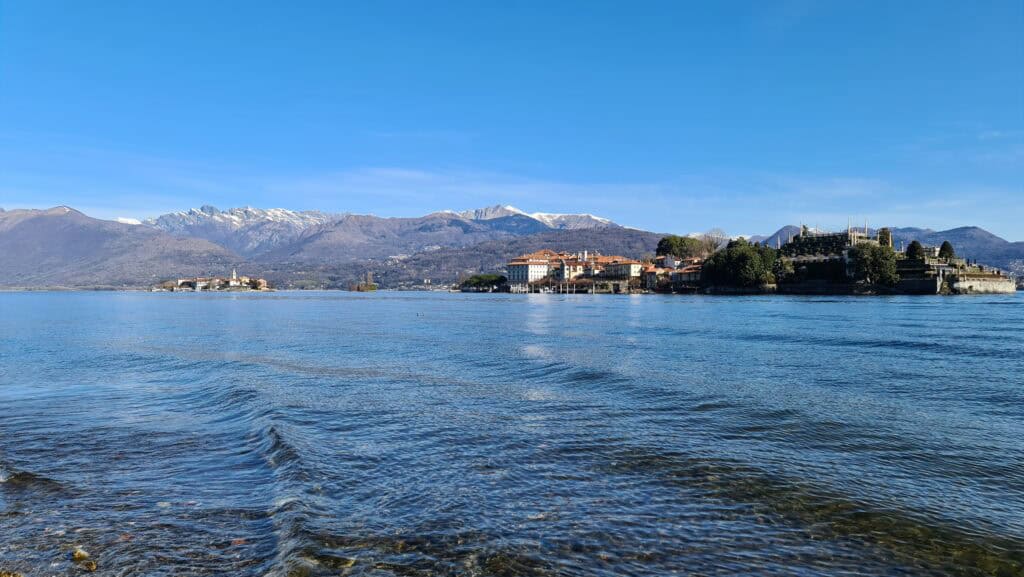
By choosing this specific train adventure, you are not only enjoying a world-class Swiss mountain experience but also gaining immediate access to the spectacular, “Instagrammable” lakes, mountains, and unique cultural spots of Northern Italy, making your entire trip a seamless blend of Alpine beauty and Mediterranean charm.

Other beautiful adventures in the Alps
Explore the Italian Swiss Alps: 1 Unforgettable Adventure on Mount Rosa